Best Camping Power Solutions for Extended Trips 2026

Photo by Zendure Power Station on Unsplash
Best Camping Power Solutions for Extended Trips 2026
Extended camping trips demand power systems that can sustain devices for days without resupply. Unlike weekend getaways, multi-week adventures require planning around battery capacity, recharge speed, and weight trade-offs. This guide walks you through the core decisions and shows which systems match real camping scenarios.
Why Extended Camping Needs Different Power Planning
A three-day trip and a two-week expedition face opposite constraints. Short trips tolerate heavier, higher-capacity units because you’re driving to a basecamp. Long trips demand either multiple smaller batteries, solar recharge capability, or a generator—because a single large battery eventually runs dry.
The most common mistake is buying capacity without considering daily recharge rhythm. If you camp near a car, solar panels become your lifeline. If you’re hiking to remote sites, weight per watt-hour matters more than total capacity.
Portable Power Station Capacity Guide: How Many Watt-Hours Do You Need?
Calculating Your Daily Power Budget
Start by listing what you’ll actually run:
- Phones & tablets: 15–25 Wh per full charge
- Laptop: 40–100 Wh depending on model
- Portable speaker: 5–20 Wh per charge
- LED camp lights: 2–5 Wh per night (8 hours)
- Portable fan or heater: 500–1500 Wh per day
- Camera & drone batteries: 20–50 Wh per charge
Multiply your daily draw by trip length. A 10-day trip with 200 Wh daily demand needs 2000 Wh usable capacity. But batteries degrade under deep discharge, so add 20–30% buffer per manufacturer guidance. That’s 2500 Wh minimum.
If you’re relying on solar recharge, a 200W solar array in good sun recovers 600–800 Wh per day, depending on season and cloud cover. Best Portable Solar Panels for Camping: Reviews and Comparison
Portable Power Stations: The Extended-Trip Backbone
Power stations (also called portable power banks) combine a battery, inverter, and charging ports in one box. For extended trips, you want:
- Capacity in the 500–3000 Wh range (lighter units for backpacking, heavier for basecamp or RV)
- Multiple input methods (AC wall, 12V car, USB-C, solar)
- Pass-through charging (ability to charge devices while the station itself charges)
- Expandable battery packs (some models stack additional units for longer trips)
Mid-Capacity Stations (500–1500 Wh)
These suit week-long trips where you’ll recharge via solar or a generator every 2–3 days. They’re portable enough to fit a car trunk or large backpack, yet hold enough for daily smartphone, laptop, and lighting use.
Mid-capacity units like the Jackery Explorer 1000 Plus and 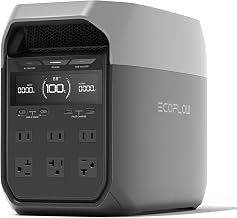
High-Capacity Stations (2000+ Wh)
For basecamp setups or RV travel, larger stations eliminate the need for daily recharge cycles. The trade-off is weight and cost. Models like EcoFlow Delta Pro and 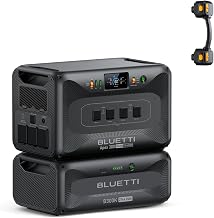
Best Portable Power Stations for RVs and Camping 2026
Solar Panels: The Recharge Engine
A portable power station without solar is a countdown timer. On extended trips, solar panels become your fuel pump.
What to look for:
- Wattage: 100–400W for camping. A 200W panel recovers ~600–900 Wh per sunny day.
- Foldable design: Easier to transport and position toward the sun.
- MPPT controller: Built-in or external—ensures maximum power transfer from panel to battery.
- Weather resistance: You’ll be deploying this in dust, dew, and occasional rain.
Most portable power stations from 2026 include MPPT controllers internally, so a simple plug-and-play solar panel works without extra gear. Brands like Goal Zero, Jackery, and EcoFlow all ship solar-ready units.
Real-world scenario: A camper with a 200W solar panel and 1500 Wh station can sustain indefinitely if daily use stays under 600 Wh and weather is decent. Cloudy days or high consumption require a backup generator or second battery. In winter or heavily clouded regions, expect 30–50% reduction in solar output compared to sunny seasons.
Batteries and Expandable Systems
Some camping setups use modular battery packs alongside a power station. This is especially useful for:
- Multi-week trips where you want to swap a depleted battery for a charged one
- Team expeditions where each person carries a battery module
- Graduated capacity starting small and adding modules as trip length increases
Per manufacturer specs, batteries like the 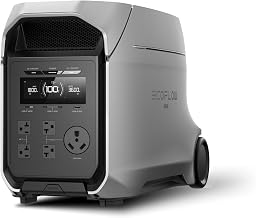
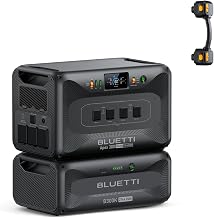
Generator Backup for Truly Remote Trips
Solar alone isn’t reliable in winter or dense forest. A quiet, fuel-efficient generator serves as a backup recharge source.
For camping, prioritize:
- Quiet operation (under 60 dB at 25% load, so you don’t disturb neighbors or wildlife)
- Lightweight (under 30 lbs for portable models)
- Dual-fuel or propane (easier to store long-term than gasoline)
A 2000W inverter generator like the Honda EU2200i or 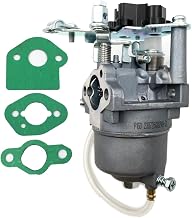
Best Quiet Generators for Home Backup Power 2026
Weight vs. Capacity Trade-Off
Ultralight backpackers (under 20 lbs total gear weight): The Anker 521 Portable Power Station (~500 Wh, 5 lbs) plus a 100W solar panel (~3 lbs) keeps you under 15 lbs and handles phone, camera, and small lights for a week with ~100 Wh/day use.
Car-based campers: A 2000+ Wh station like the EcoFlow Delta Pro with 200–400W solar panels is practical. You’re not carrying it far, and the extra capacity eliminates daily recharge stress for 10–14 days of typical use.
RV or van dwellers: Stacked batteries (4000–6000 Wh) like the Bluetti AC500 + B300S with 400W+ solar and a generator backup give you true off-grid autonomy for 2–4 weeks.
Charging Speed and Efficiency
Extended trips mean downtime. Faster recharge cycles mean more time exploring and less time babysitting a battery.
- AC wall charging (at a campground): 2–6 hours, most efficient
- Solar charging: 6–12 hours depending on sun and panel wattage
- Car charging (12V): 12–24 hours, slow but useful as a trickle
- Generator charging: 1–3 hours, quick but noisy and fuel-dependent
Multi-input capability is key. A station that accepts AC, solar, and 12V simultaneously (or in any combination) lets you charge from whatever source is available.
Real-World Extended Trip Scenarios
10-Day Desert Basecamp Trip
- Station: 2000 Wh (e.g., EcoFlow Delta Pro)
- Solar: 200W portable panel
- Daily use: 300 Wh
- Breakdown: laptop 80 Wh, phone 20 Wh, lights 15 Wh, fridge 185 Wh
- Recharge: Solar every 2–3 days
- Backup: Small propane stove (no generator needed)
3-Week Backcountry Hiking
- Station: 500 Wh (Anker 521 Portable Power Station)
- Solar: 100W foldable panel
- Daily use: 100 Wh
- Breakdown: phone 25 Wh, headlamp 10 Wh, camera 50 Wh, portable speaker 15 Wh
- Recharge: Daily solar, enough for 3–4 cloudy days
- Weight: ~15 lbs total
- Backup: Hand-crank charger for phone (emergency only)
2-Week RV Trip with Family
- Stations: 2 × 3000 Wh (stacked modules, e.g., Bluetti AC500 + B300S)
- Solar: 400W array on RV roof
- Daily use: 800 Wh
- Breakdown: fridge 400 Wh, lights 120 Wh, fans 180 Wh, devices 100 Wh
- Recharge: Solar + occasional 30A RV hookup at campground
- Backup: 3000W generator for cloudy days
Maintenance and Care for Long Trips
Batteries degrade faster in extreme heat or cold. On extended trips:
- Keep stations in shade during the day
- Charge to 80%, discharge to 20% if possible (extends cycle life per manufacturer cycle-life testing)
- Monitor temperature: Most stations stop charging below 32°F
- Check connections weekly for corrosion or loose wires
- Update firmware before leaving (some models ship with efficiency patches)
Per manufacturer cycle-life testing, stations maintained this way often deliver 3–5 years of daily use before noticeable capacity loss.
FAQ
Q: Can I run a refrigerator on a portable power station for a week? A: Yes, but barely. A 12V portable fridge draws 3–5 Wh per hour per typical 12V fridge specs, or 72–120 Wh per day. A 1500 Wh station would last 12–20 days in theory, but fridges cycle on/off, and efficiency losses mean real-world life is 10–15 days. For longer trips, pair a fridge with a 200W+ solar panel and sunny weather, or use a gas-powered cooler.
Q: Should I buy one large battery or two smaller ones? A: Two smaller batteries offer redundancy (if one fails, you still have power) and flexibility (charge one while using the other). One large battery is simpler to manage but riskier. For trips over 2 weeks, two units is the safer choice.
Q: Do I need a generator if I have solar panels? A: Not always. In sunny climates, 200W of solar recovers enough power daily to sustain typical camping use. In cloudy regions or winter, a generator (or second battery) is essential. Plan for at least 3–4 cloudy days per week.
Q: How long do portable power stations last? A: Most lithium-ion stations are rated for 500–1000 full charge cycles. Used daily on a camping trip, that’s 1.5–3 years before noticeable capacity loss. Some premium models (EcoFlow, Bluetti) use LiFePO4 chemistry and last 3000+ cycles (8–10 years).
Q: What’s the best solar panel size for camping? A: For extended trips, 200W is the sweet spot—enough to recover 600–900 Wh on a sunny day, light enough to carry. 100W is fine for ultralight trips; 400W is better for RVs or large groups.
Summary
Extended camping trips succeed when power planning starts before you leave. Calculate your daily draw, choose a station that matches your trip length and weight tolerance, add solar for recharge insurance, and keep a generator or second battery as a backup.
For week-long trips near a vehicle, a mid-capacity station (1000–1500 Wh) with a 200W solar panel is the practical standard. For multi-week backcountry trips, go lighter and plan to recharge daily. For RV or basecamp setups, stack capacity and don’t skimp on solar wattage.
The best camping power solution isn’t the biggest or most expensive—it’s the one that keeps your devices alive without dominating your pack or budget, so you can focus on the actual adventure.

