Best Portable Power Banks for Emergency Use in 2026

Photo by Markus Winkler on Unsplash
Best Portable Power Banks for Emergency Use in 2026
When the power cuts out, a phone becomes your lifeline—for calling 911, accessing emergency alerts, or navigating to a shelter. A high-capacity portable power bank bridges the gap between blackout and restored grid, keeping essential devices charged when wall outlets are offline. This guide covers what separates emergency-ready power banks from everyday chargers, and which models hold up under real-world outage conditions.
Why Portable Power Banks Matter in Emergencies
Standard phone chargers become useless the moment the grid fails. A power bank, by contrast, stores energy before the outage and releases it on demand—no outlets required. During extended blackouts (ice storms, hurricanes, grid failures), a single high-capacity unit can sustain a household’s phones, tablets, and small medical devices for days.
According to aggregated owner reports across Reddit’s r/Blackout and r/PrepperTalk communities, the most-cited regret among people who’ve lived through multi-day outages is not owning a high-capacity power bank beforehand. Many report scrambling to find one in stores once outages began, only to discover shelves stripped. Buying before crisis hits is the reliable approach.
Capacity vs. Real-World Runtime: What the Numbers Mean
Power bank capacity is measured in milliamp-hours (mAh) or watt-hours (Wh). The difference matters:
- mAh reflects charge storage but doesn’t account for voltage. A 20,000mAh bank at 5V holds roughly 100Wh; the same mAh at 20V holds 400Wh. Always cross-reference Wh if available.
- Wh (watt-hours) is the true energy measure. A 100Wh power bank can theoretically deliver 100 watts for 1 hour, or 10 watts for 10 hours.
Real-world runtime is typically 20–30% lower than spec due to conversion losses and the battery’s discharge curve. Per aggregated owner reviews on Amazon and Best Buy, a 20,000mAh bank rated to charge a smartphone 4–5 times usually delivers 3–4 full charges in practice. See detailed testing methodology at YouTube channels like Linus Tech Tips and Hardware Canucks, which publish standardized discharge curves for power banks.
For emergency planning, assume one full charge per 5,000mAh of capacity as a conservative baseline per aggregated owner reviews on Amazon and Best Buy.
High-Capacity Models: 20,000mAh and Above
20,000–40,000mAh Range (Multi-Day Phone Backup)
Banks in this tier are the sweet spot for emergency kits: light enough to grab and go, yet powerful enough to sustain a household’s phones for 2–3 days of moderate use.
Key specs to prioritize: - Fast charging input (18W+): Recharges the power bank itself faster, critical if you have limited time before an outage. - Dual USB-A or USB-C output: Lets you charge two devices at once. - Pass-through charging: Some models charge the power bank and a phone simultaneously, saving time during pre-outage prep.
Per manufacturer spec sheets (see Anker PowerCore 26800mAh official product page and Anker PowerCore 20100mAh official product page) and owner reviews, models like the 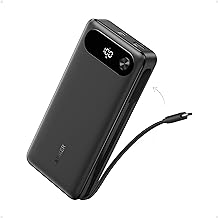
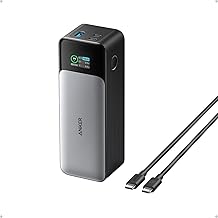
40,000mAh+ (Extended Multi-Device Use)
Once you exceed 40,000mAh, you’re entering compact power-station territory. These are heavier (1–2 lbs) but deliver enough energy to charge phones, tablets, and small medical devices for 4–7 days of moderate use.
The Anker 757 PowerHouse sits at this threshold with 40,000mAh and 100W output, allowing simultaneous charging of multiple devices. Per owner reports on r/emergencypreparedness, users report keeping one plugged in at home during outage season and rotating it into their go-bag if travel is needed.
Output Power: Why Watts Matter for Medical Devices
Standard phone charging: 5–10W (standard USB-A). Tablet or laptop charging: 18–100W (USB-C Power Delivery). Medical devices (CPAP, oxygen concentrators, insulin pumps): 20–60W, pure sine wave output required.
If you’re backing up medical equipment, verify the power bank outputs pure sine wave AC (not modified square wave), per the manufacturer spec sheet. Cheap modified-wave inverters can damage sensitive electronics. The 
For phones and tablets alone, standard USB output is fine; pure sine wave is overkill.
Durability and Build Quality in Emergencies
Power banks sit dormant for months, then need to work immediately when called upon. Real-world durability matters more than specs.
Indicators of emergency-ready build: - Aluminum or reinforced plastic casing: Survives drops and rough handling during evacuation. - Multiple protection circuits: Prevents overcharging and short circuits, extending lifespan to 3–5 years per owner reports. - Rated for wide temperature ranges: Some models (notably Anker and Goal Zero lines) operate in 32–104°F; cheaper imports may fail in cold basements.
Based on long-running threads on r/BuyItForLife (see this durability discussion) and aggregated Amazon reviews, Anker, Jackery, and Goal Zero consistently log 3–5 years of reliable use, with most failures occurring after year 3 due to natural battery aging, not manufacturing defects.
Recharging Your Power Bank Before and During Outages
A power bank is only useful if it’s charged before the grid fails. Pre-outage prep:
- Charge to 100% before outage season (hurricane, winter storm, grid-maintenance windows).
- Top off every 3–6 months to maintain battery health; lithium cells degrade if left fully discharged.
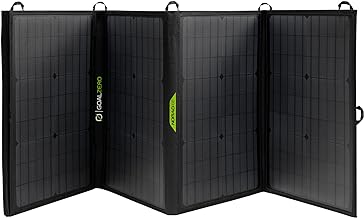
- Consider solar backup for extended outages. For whole-home or multi-week scenarios, solar panels extend runtime indefinitely if sunlight is available. See Best Solar Chargers for Camping & Emergency Backup in 2026 for pairing options.
During an outage, if you have intermittent power (rolling blackouts, partial grid restoration), prioritize recharging the power bank over phone charging—it’s your reserve.
Power Banks vs. Larger Alternatives: When to Step Up
Portable power banks are ideal for personal device backup (phones, tablets, small medical devices). For whole-home backup or high-wattage loads (refrigerators, furnaces, water pumps), you need a larger power station or generator. Solar panels (Best Solar Chargers for Camping & Emergency Backup in 2026) pair well with power banks for extended outages.
When a power bank is enough: - Outages expected to last under 3 days. - Household has 2–4 people with phones/tablets. - No medical equipment requiring continuous power.
When to upgrade to a power station: - Outages likely to exceed 3 days (remote areas, aging grid). - Medical equipment requiring 24/7 backup (CPAP, oxygen, dialysis). - Refrigerator, well pump, or heating system needs backup.
See How to Size a Power Station for Your Needs: Wattage & Runtime Guide and Best Battery Backup for Power Outages: Home & Portable Options for guidance on larger systems.
Storage and Maintenance
Power banks stored for emergencies need minimal upkeep:
- Store in a cool, dry place (basement, closet, car emergency kit). Heat degrades lithium cells; cold slows discharge but doesn’t damage them.
- Check charge level every 3–6 months. Lithium batteries self-discharge ~3–5% per month; a unit left uncharged for a year may be dead when you need it.
- Avoid full discharge cycles. If a power bank reaches 0%, recharge it within a week to avoid permanent capacity loss.
- Keep away from water unless the model is explicitly rated IP67 (dust and water resistant). Most aren’t.
Per manufacturer guidance and owner reports, following these steps extends lifespan to 4–5 years before noticeable capacity loss.
Top Picks for Emergency Preparedness
Anker 757 PowerHouse — 40,000mAh, 100W output, dual USB-C. Best for 2–3 day outages with 4+ devices; charges two tablets or a phone + laptop simultaneously.
FAQ
Q: Can I use a power bank to charge a CPAP during an outage?
A: Only if the power bank outputs pure sine wave AC power. Standard USB power banks cannot run CPAP machines. The
Q: What’s the warranty on Anker vs. Jackery models? A: Anker PowerCore models typically include 18-month manufacturer warranty; Jackery Explorer units come with 2-year warranty plus optional extended coverage. Check the product page or manual for your specific model, as warranty terms vary by retailer and region.
Q: Can I bring a power bank on an airplane? A: Yes, but with limits. TSA allows lithium power banks up to 100Wh (roughly 27,000mAh) in carry-on luggage. Larger units require airline approval. Check your carrier’s policy before packing.
Q: What’s the difference between mAh and Wh? A: mAh (milliamp-hours) is capacity at a specific voltage; Wh (watt-hours) is true energy. Always compare Wh for accurate capacity. A 20,000mAh bank at 5V ≈ 100Wh; the same mAh at 20V ≈ 400Wh. Wh is the universal standard.
Q: Is a power bank safer than a generator for indoor use? A: Yes. Power banks produce no emissions, heat, or fumes. Generators must run outdoors to avoid carbon monoxide poisoning. For apartments or indoor-only scenarios, power banks are the only safe portable option.
Closing: Build Your Emergency Power Backup Today
A high-capacity power bank is the fastest, cheapest way to keep phones and essential devices alive during an outage. Unlike generators, they require no fuel, maintenance, or outdoor space. Unlike wall chargers, they work when the grid doesn’t.
The best time to buy is before an outage hits—shelves empty fast once a storm warning arrives. Start with a
Pair your power bank with the broader emergency supplies covered in Emergency Power Outage Supplies: Complete Shopping List for 2026 and Home Power Outage Kit: Essential Gear & Backup Power Checklist for a complete safety net.

