Best Camping Power Station: Features & Runtime for 2026

Photo by Zendure Power Station on Unsplash
Best Camping Power Station: Features & Runtime for Outdoor Adventures
A camping power station keeps your devices charged, powers camp lights and fans, and runs small appliances during backcountry trips or off-grid basecamp setups. Choosing the right one means matching capacity (measured in watt-hours, or Wh) to your actual runtime needs, understanding inverter wattage for the gear you’ll run, and balancing portability against power output.
This guide walks you through the key specs that matter, explains how to estimate your runtime, and recommends models across different camping scenarios—from lightweight backpacking to extended RV trips.
How Camping Power Stations Differ from Home Backup Units
Home backup systems prioritize wall-plug convenience and whole-house capacity; camping power stations prioritize portability, solar-charging input, and rugged outdoor durability. A camping unit must tolerate temperature swings, vibration in vehicles, and occasional drops or moisture exposure. Most feature AC outlets, USB ports (both standard and USB-C), and 12V car-lighter sockets to run diverse gear.
Home units often come as fixed installations or heavy stationary models; camping stations weigh 5–80 lbs and fit in vehicle trunks or backpacks. They’re designed to recharge from solar panels, car chargers, or wall outlets—giving you flexibility on extended trips where grid power is unavailable.
Capacity: Watt-Hours (Wh) and Real-World Runtime
Capacity is the total energy stored, measured in watt-hours (Wh). A 1000Wh station supplies 1000 watts for one hour, or 100 watts for ten hours (in theory; real-world efficiency losses reduce this by 10–20%).
Common capacity tiers for camping:
- Under 300Wh: Ultralight, 1–3 lbs. Charges phones, small lights, and USB devices; poor for AC appliances.
- 300–700Wh: Backpacking sweet spot. Runs phone, laptop, and LED camp lights for 2–4 days of moderate use.
- 700–1500Wh: Car camping and weekend RV trips. Powers a small cooler, fan, heater, and multiple devices for 1–3 days without recharge.
- 1500Wh+: Extended off-grid basecamp or RV living. Supports larger loads (space heaters, compressors, power tools) and multi-day runtime without solar input.
To estimate runtime, divide capacity by your average load. If you’re drawing 200 watts (laptop, phone charger, LED light), a 1000Wh station runs for roughly 5 hours at full draw—but realistic camping loads average 50–150 watts, extending runtime to 10–20 hours.
Inverter Wattage and Peak Power
The inverter converts the station’s stored DC power into 120V AC for standard plugs. Its wattage rating determines which appliances you can run simultaneously.
Common inverter ratings:
- 500–1000W: Phones, laptops, LED lights, small fans, USB devices. Cannot run space heaters, compressors, or power tools.
- 1500–2000W: Above items plus small coolers, hair dryers, modest AC units, and some power tools.
- 2500W+: Heavy-duty camping—full-size coolers, larger heaters, multiple high-draw appliances at once.
Peak vs. continuous wattage: Many units list a peak surge wattage (what they can handle for a few seconds) and continuous wattage (sustained output). A device that draws 2500W on startup might settle to 1500W running. Check both specs; if your inverter’s continuous rating is below your gear’s running wattage, it will shut down or throttle.
Charging Speed and Solar Compatibility
How fast you recharge matters on multi-day trips. Wall charging is fastest (2–8 hours for full recharge, depending on charger wattage). Car charging via 12V socket is slower (8–24 hours). Solar charging is slowest but most valuable off-grid.
Solar input specs to compare:
- Solar input wattage: Higher is better. 100–200W solar input means a 200W solar panel can charge the station in 5–10 hours of good sunlight.
- MPPT vs. PWM controllers: MPPT (Maximum Power Point Tracking) is more efficient, capturing 20–30% more energy from panels in variable light.
- Compatibility: Some stations accept proprietary solar panels; others work with standard MC4-connector panels (more flexible, easier to upgrade).
Best Solar Chargers for Camping & Emergency Backup in 2026 and Portable Solar Panels for Camping: Reviews & Buyer's Guide dive deeper into solar charging strategies.
Weight, Size, and Portability
Backpackers care about grams; car campers tolerate 30–50 lbs. Consider where you’ll carry it: backpack, vehicle, or basecamp cart.
- Under 5 lbs: Fits in a daypack; limited capacity (200–300Wh).
- 5–15 lbs: Car camping standard; 300–700Wh range; manageable by one person.
- 15–50 lbs: Vehicle-based only; 1000–3000Wh; two-person carry or cart recommended.
- 50+ lbs: Stationary basecamp or RV use; 3000Wh+; requires cart or permanent placement.
Handle design, corner bumpers, and whether the unit fits standard vehicle cup holders or tie-down points affect real-world usability.
Key Features to Evaluate
Pass-through charging: Ability to charge the station while simultaneously powering devices. Useful for RV setups where you’re driving and charging at the same time.
Modular expansion: Some units (like EcoFlow and Bluetti models) allow you to add battery modules, increasing capacity without replacing the entire unit. Valuable if your camping needs grow.
Wireless charging: Convenient for phones and earbuds; adds modest cost and is rarely essential for camping.
Display and app control: A clear LED screen showing remaining capacity, wattage draw, and input/output status is helpful. Bluetooth apps let you monitor remotely but aren’t critical outdoors.
Temperature tolerance: Most units operate safely from 32°F to 104°F (0–40°C). High-altitude or arctic camping may require units with extended cold ratings.
Warranty: 2–5 years is standard. Longer warranties (5+ years) suggest manufacturer confidence in durability.
For detailed guidance on matching capacity and wattage to your specific needs, see How to Size a Power Station for Your Needs: Wattage & Runtime Guide.
Top Camping Power Station Picks
Best for ultralight backpacking: Anker 521 Portable Power Station — 256Wh, under 3 lbs, charges phones and USB devices for 2–3 days of light use. Compact enough for a daypack; limited to USB and 12V outputs (no AC outlet).
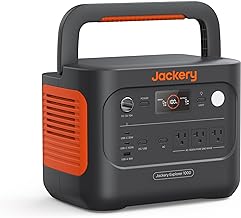
Best for weekend car camping:
Best for extended off-grid trips: EcoFlow Delta Pro — 3600Wh base (expandable to 7200Wh), 3600W inverter, 1600W solar input, modular design. Supports large loads and multi-day camping without recharge. Heavier (~35 lbs base unit) but worth it for remote basecamp use.
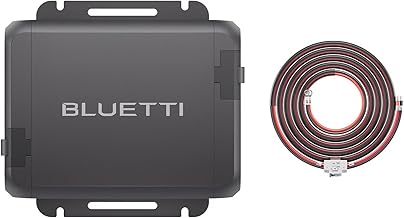
Best for budget-conscious campers:
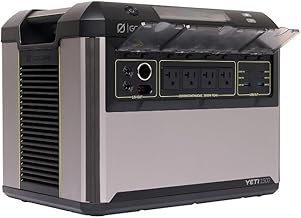
Best for RV and stationary basecamp:
Runtime Estimation: A Practical Example
Let’s say you’re car camping for a weekend. Your typical load:
- Phone charging (overnight): 10W × 8 hours = 80Wh
- Laptop work (4 hours daily): 50W × 4 hours = 200Wh
- LED camp light (8 hours): 10W × 8 hours = 80Wh
- Small fan (4 hours): 20W × 4 hours = 80Wh
Daily draw: ~440Wh per day. Accounting for 10–15% inverter efficiency losses, realistic consumption is ~500Wh daily.
A 1000Wh station would run roughly 2 days at this load. If you add a small cooler (100W, 4 hours daily = 400Wh), you’d consume ~900Wh daily, cutting runtime to just over 1 day. A 1500Wh station becomes safer insurance for a full weekend without recharge.
For basecamp use where you’re powering larger appliances (space heater, power tools, compressors), runtime drops dramatically. A 2500W load on a 1000Wh station runs less than 30 minutes; you’d need 3000Wh+ for meaningful runtime.
Solar Charging and Off-Grid Independence
Pairing a power station with solar panels extends your off-grid window. A 200W solar panel in full sunlight (6 peak hours) generates 1200Wh of energy. Accounting for MPPT controller efficiency (~90%) and typical cloud cover variability, expect ~1000Wh of usable daily input—enough to offset moderate camping loads and recharge the station for the next day. Actual results vary by season, latitude, and weather conditions.
Budget-tier solar solutions are covered in Best Solar Chargers for Camping & Emergency Backup in 2026; larger DIY setups are explored in RV Solar Power System: DIY Setup vs Portable Solutions.
FAQ
Q: How long do camping power stations last before the battery degrades? A: Most lithium stations retain 80% capacity after 500–1000 charge cycles (roughly 2–5 years of regular use), per manufacturer specifications and owner reports. LiFePO₄ chemistry (used in premium models) lasts longer—up to 3000+ cycles. Proper storage (cool, dry, 20–80% charge) extends lifespan.
Q: Can I charge my power station while camping without solar? A: Yes. Car chargers (12V) are slow (8–24 hours for full recharge) but work while driving. Wall outlets at campgrounds with hookups are fastest (2–8 hours). For extended off-grid trips, solar is essential; without it, you’re limited to a single charge cycle.
Q: What’s the difference between a power station and a portable generator? A: Power stations are battery-based, silent, and zero-emission—ideal for campsites with quiet hours. Generators use fuel (gasoline, propane, solar) and produce noise and exhaust. For car camping, power stations are cleaner; for extended RV trips or heavy loads, generators or hybrid setups are more practical. See Portable Generator Fuel Types: Propane vs Gasoline vs Dual-Fuel for generator comparisons.
Q: Do I need a power station if I have a car charger for my devices? A: Car chargers work only while the vehicle is running (draining fuel and producing noise). A power station lets you power camp lights, fans, and devices independently, without idling the engine. For weekend trips with modest loads, a power station is more efficient and eco-friendly.
Q: What wattage power station do I need for a 2-person camping trip? A: 500–1000Wh covers most weekend car camping (phones, laptop, lights, fan). Add a small cooler or heater, and aim for 1000–1500Wh. For basecamp use with multiple appliances, 1500Wh+ is safer. Use How to Size a Power Station for Your Needs: Wattage & Runtime Guide to calculate your exact load.
Q: What’s the warranty claim process for camping power stations? A: Most manufacturers (Jackery, EcoFlow, Bluetti, Goal Zero) offer 2–5 year warranties covering defects in materials and workmanship. To file a claim, contact the brand’s customer service with proof of purchase and photos of the issue. Damage from misuse, water immersion, or unauthorized repairs typically voids coverage. Review the specific warranty terms on the product page before purchase.
Q: Can I use a camping power station in extreme cold? A: Most units operate safely down to 32°F (0°C), but battery efficiency drops significantly below freezing. At 0°F (–18°C), you may see 30–50% capacity loss and slower charging. For winter camping, keep the station insulated (in a sleeping bag or insulated case) and avoid charging until it warms to room temperature. Premium models with extended cold ratings (down to –4°F / –20°C) are available but cost more.
Final Thoughts
The best camping power station matches your trip duration, device load, and portability tolerance. Ultralight backpackers thrive with 200–300Wh units; weekend car campers should target 700–1500Wh; extended basecamp or RV trips benefit from 1500Wh+ with solar charging. Check inverter wattage against your heaviest simultaneous load, verify solar compatibility if off-grid independence matters, and prioritize brands with solid warranty support and owner reviews.
Start with the quick picks above, then refine based on your specific gear and trip profile. If you’re building a complete camping power setup, explore Best Emergency Kit for RV: Gear Checklist & Power Solutions and Home Power Outage Kit: Essential Gear & Backup Power Checklist for complementary gear and redundancy strategies.

