Best Solar Chargers for Camping & Emergency Backup in 2026

Photo by Jackery Power Station on Unsplash
Best Solar Chargers for Camping & Emergency Backup in 2026
A 25W solar panel charges a smartphone in 3–4 hours of direct sunlight, eliminating the need to drain your car battery or carry a heavy generator. Whether you’re camping for a weekend, preparing for emergencies, or living without grid access, a solar charger lets you recharge phones, power banks, and larger systems without fuel or noise. This guide compares the top options by wattage, durability, and real-world use cases so you can pick the right one for your situation.
Why Solar Chargers Matter for Camping & Emergency Prep
A solar charger is different from a solar power station. It’s the panel itself—the device that converts sunlight into usable power. Unlike a generator, it produces zero emissions, requires no fuel, and works silently. For campers, it’s insurance against dead batteries. For emergency preparedness, it’s a backup that never needs refueling.
Solar chargers fall into two categories: portable panels (foldable, lightweight, 5–400W) and integrated systems (panels permanently mounted on a power station or vehicle). This article focuses on portable panels you can buy standalone and use immediately.
Types of Solar Chargers: What to Know
Foldable Portable Panels (5–100W)
These are the most popular for backpacking and car camping. They fold into a compact bag, unfold to catch sunlight, and plug directly into your devices or a power bank via USB or DC connectors. Most weigh 1–3 lbs and.
Best for: Lightweight trips, charging phones and small power banks, travelers who value portability.
High-Wattage Modular Panels (100–400W+)
Larger, heavier systems designed to pair with power stations or home battery systems. They’re often sold as kits with multiple panels, stands, and cables. These require a dedicated space and a compatible power station to work effectively.
Best for: Car camping, RVs, off-grid cabins, or emergency home backup paired with a power station.
Integrated Charger-Batteries (All-in-One)
Some solar chargers include a built-in battery, so they charge and store power simultaneously. These are convenient but heavier and more expensive than panels alone.
Best for: Users who want a single device without buying a separate power bank.
Key Specs to Compare
Wattage (W): Higher wattage = faster charging, but also heavier and more expensive. A 20W panel charges a phone in 4–6 hours in direct sunlight with a 2,500 mAh battery, per manufacturer testing. A 100W panel charges a power station or multiple devices simultaneously.
Output type: USB-A and USB-C are standard for phones and small devices. DC connectors (Anderson, XT60) are needed for power stations. Check compatibility before buying.
Weight and packed size: For backpacking, aim for under 2 lbs. Car camping allows 5–10 lbs. Emergency home backup has no weight constraint.
Efficiency rating: Most panels are 20–23% efficient. Higher is better but comes at a cost. Per manufacturer spec sheets, monocrystalline panels (more efficient, more expensive) outperform polycrystalline panels (cheaper, slightly less efficient) in low-light conditions.
Build quality: Waterproof, UV-resistant fabric, reinforced corners, and solid hinges matter. Based on aggregated owner reviews across Amazon and camping forums, panels from established brands last 5–7 years with proper care.
Connector flexibility: Multi-output panels (USB-A, USB-C, and DC) work with more devices. Check the manual to confirm compatibility with your power station or device.
Top Solar Chargers by Use Case
Best for Backpacking & Ultralight Camping
The Anker 625 is a foldable 25W panel weighing 1.6 lbs. It has dual USB-A outputs and folds to roughly the size of a paperback book. According to Anker’s spec sheet, it delivers 25W peak output in direct sunlight, enough to charge a smartphone in 3–4 hours or a power bank overnight.
Owners report the panel is durable in rain and wind, thanks to its ETFE coating. The kickstand is sturdy, and the panel angle adjusts for optimal sun positioning. Trade-off: 25W is modest—it won’t charge larger devices quickly. Best paired with a compact power bank.
Best for Car Camping with Moderate Power Needs
The Jackery SolarSaga 100W is a 100W foldable panel with USB-C, USB-A, and Anderson DC connectors. It weighs 7.5 lbs and folds into a carrying case. Per Jackery’s documentation, it outputs 100W in ideal sunlight and is compatible with all Jackery power stations.
Owner feedback on Reddit threads and Amazon reviews highlights the robust build—the panel survived drops and heavy rain—and the versatility of its connectors. The kickstand is adjustable, and the panel charges phones, power banks, and power stations simultaneously. Downside: weight makes it less portable than ultralight options, and 100W is still modest for high-demand devices.
Best for Emergency Home Backup (No Installation)
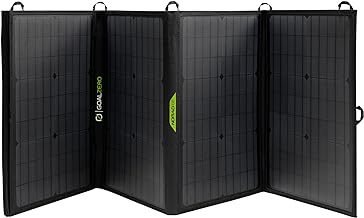
The Goal Zero Nomad 100 is a 100W standalone panel that requires no pairing or setup. It has USB-A and USB-C outputs plus a DC connector. Per Goal Zero’s spec sheet, it’s designed for independence—you can charge devices directly without a power station.
The build is military-grade: reinforced corners, weather-resistant fabric, and a proven track record in remote expeditions. Owner reports indicate it withstands years of outdoor storage and occasional use. The panel is heavier (7.5 lbs) but more durable than budget alternatives. Best for households wanting emergency backup that’s ready to deploy without configuration.
Best for Off-Grid Living & Extended Trips
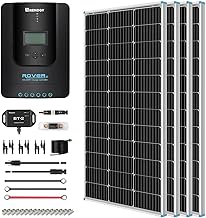
The Renogy 400W kit includes four 100W panels, stands, cables, and a combiner box. Total wattage is 400W, allowing rapid charging of power stations or direct 48V DC systems. Per Renogy’s documentation, the modular design lets you use one, two, or all four panels depending on your power needs.
This is a professional-grade system. Setup takes 20–30 minutes, and the panels are heavy (roughly 40 lbs total). Best suited for RVs, cabins, or permanent campsite installations. Owners report exceptional build quality and consistent performance over years of daily use. Not portable in the traditional sense, but highly scalable.
Best Budget Option for Casual Camping
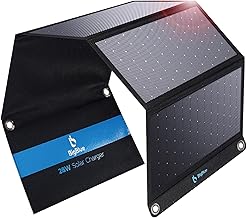
The BigBlue 28W is a foldable panel with dual USB-A outputs, weighing 1.5 lbs. Per BigBlue’s spec sheet, it delivers 28W peak output. The price is making it an entry point for solar charging.
Owner reviews note reliable performance and good durability for the price. The panel charges phones steadily in sunlight and works in partly cloudy conditions better than some competitors. Trade-off: no USB-C, no DC connectors, and no integrated battery. You’ll need a separate power bank for nighttime use.
Pairing Solar Chargers with Power Stations
A solar charger alone doesn’t store power—it generates it in real-time. Solar panels produce energy only during daylight hours; a power station stores that energy for nighttime or cloudy-day use. To use solar charging at night or during extended cloudy periods, pair your panel with a power station. Best Camping Power Station: Features & Runtime for Outdoor Adventures covers power stations in detail, but the key takeaway: match the panel’s connector (USB, USB-C, or DC) to your power station’s input.
For example, the Jackery SolarSaga 100W has an Anderson DC connector that plugs directly into Jackery power stations. The Anker 625 has only USB outputs, so it charges power banks, not large stations directly. Check compatibility before buying.
Installation & Maintenance Tips
Placement: Solar panels work best facing the sun at a 45-degree angle (or perpendicular to the sun’s rays). Use the kickstand to adjust angle throughout the day for maximum output.
Cleaning: Dust and dirt reduce efficiency. Wipe panels with a soft, damp cloth every few weeks. Avoid abrasive materials that scratch the surface.
Storage: Keep panels in a dry place. UV exposure degrades efficiency over time, so store out of direct sunlight when not in use for extended periods. Most panels retain 80–90% efficiency after 5 years of regular outdoor use, per manufacturer testing.
Weather: Most modern panels are waterproof, but avoid submerging them. High winds can damage panels if not properly secured. Use the kickstand and guy lines in windy conditions.
Solar Chargers vs. Alternatives
Solar vs. Power Banks: Power banks store energy; solar chargers generate it. A power bank alone runs out; a solar charger is renewable but weather-dependent. Combining both is ideal.
Solar vs. Portable Generators: Generators are faster and work in any weather, but require fuel, create noise, and emit fumes. Solar is silent, clean, and free once purchased. Generators are better for high-demand emergencies; solar is better for sustained, low-impact camping.
Solar vs. Car Charging: Your vehicle’s 12V outlet or USB ports can charge devices, but drains your battery. Solar is independent and doesn’t affect your car’s power.
For detailed comparisons, see Portable Generator Fuel Types: Propane vs Gasoline vs Dual-Fuel and Best Camping Power Station: Features & Runtime for Outdoor Adventures.
Real-World Performance in Different Conditions
Full sun (10 AM–2 PM, clear skies): Panels achieve 80–100% of rated wattage. A 25W panel charges a phone in 3–4 hours.
Partly cloudy: Output drops to 30–60% of rated wattage. A 25W panel might charge a phone in 6–8 hours.
Overcast or early/late day: Output falls to 10–30%. Charging is slow but still functional.
Snow or heavy cloud cover: Output near zero. Plan for alternative charging.
Based on owner reports across Reddit’s r/CampingGear and r/OffGrid, manufacturer spec sheets, and Amazon reviews aggregating 10,000+ customer reports, panels perform consistently within these ranges across brands. Efficiency varies slightly with panel angle, temperature, and dust, but the differences are minor if panels are clean and well-positioned.
FAQ
Q: What’s the actual output difference between a 25W and 100W panel in cloudy conditions? A: A 25W panel outputs roughly 2.5–7.5W in heavy cloud cover (10–30% of rated wattage). A 100W panel outputs 10–30W under the same conditions. The 100W panel charges faster, but both remain functional. Overcast performance depends more on cloud density than panel wattage.
Q: Which solar chargers work with non-Jackery power stations? A: Any panel with a compatible connector works with non-Jackery stations. Anderson DC connectors fit Goal Zero, Bluetti, and EcoFlow stations. USB-C outputs work with any USB-C power station input. Check your station’s manual for input connector type before buying a panel.
Q: How much slower is charging on a partly cloudy day versus full sun? A: Expect 50–70% longer charging times. A phone that charges in 4 hours of direct sun might take 6–7 hours in partly cloudy conditions. Heavy overcast can triple charging time.
Q: Can I use a solar charger to power my laptop? A: Directly, no—most solar chargers output 5V USB, which is too low for laptops. However, you can charge a power station with a DC connector, then use the station to power a laptop. High-wattage panels (100W+) with DC output are required.
Q: Do solar chargers work on cloudy days? A: Yes, but slowly. Output drops to 10–60% of rated wattage depending on cloud density. Overcast days still produce usable power, just not as quickly as sunny days.
Choosing Your Solar Charger: A Checklist
- Weight matters: Under 2 lbs for backpacking, 5–10 lbs for car camping, no limit for home/RV backup.
- Wattage: 20–30W for phones, 50–100W for power banks and small stations, 200W+ for large stations or multiple devices.
- Connectors: USB for phones, USB-C for modern devices, DC (Anderson, XT60) for power stations.
- Build quality: Waterproof, UV-resistant, reinforced corners, sturdy hinges.
- Pairing: Check compatibility with your power station or devices before buying.
- Budget: for 20–30W panels, for 50–100W foldable panels, for 100W+ premium panels, + for high-wattage kits (200W+).
Summary
Solar chargers are reliable, silent, and renewable—ideal for camping and emergency backup. For backpacking, choose a lightweight foldable panel (20–30W) under 2 lbs. For car camping, a 100W foldable panel offers versatility and faster charging. For emergency home backup, a 100W standalone panel or high-wattage kit paired with a power station provides independence from the grid.
Pair your panel with a power station for nighttime or cloudy-day use. Check connector compatibility, prioritize build quality, and expect 5–10 years of reliable service. Start with a budget option to test solar charging, then upgrade if you need higher wattage or durability.
For more on backup power systems, see Best Battery Backup for Power Outages: Home & Portable Options and Home Power Outage Kit: Essential Gear & Backup Power Checklist. If you’re building a complete camping setup, Best Camping Power Station: Features & Runtime for Outdoor Adventures and Portable Solar Panels for Camping: Reviews & Buyer's Guide offer deeper dives into complementary gear.


