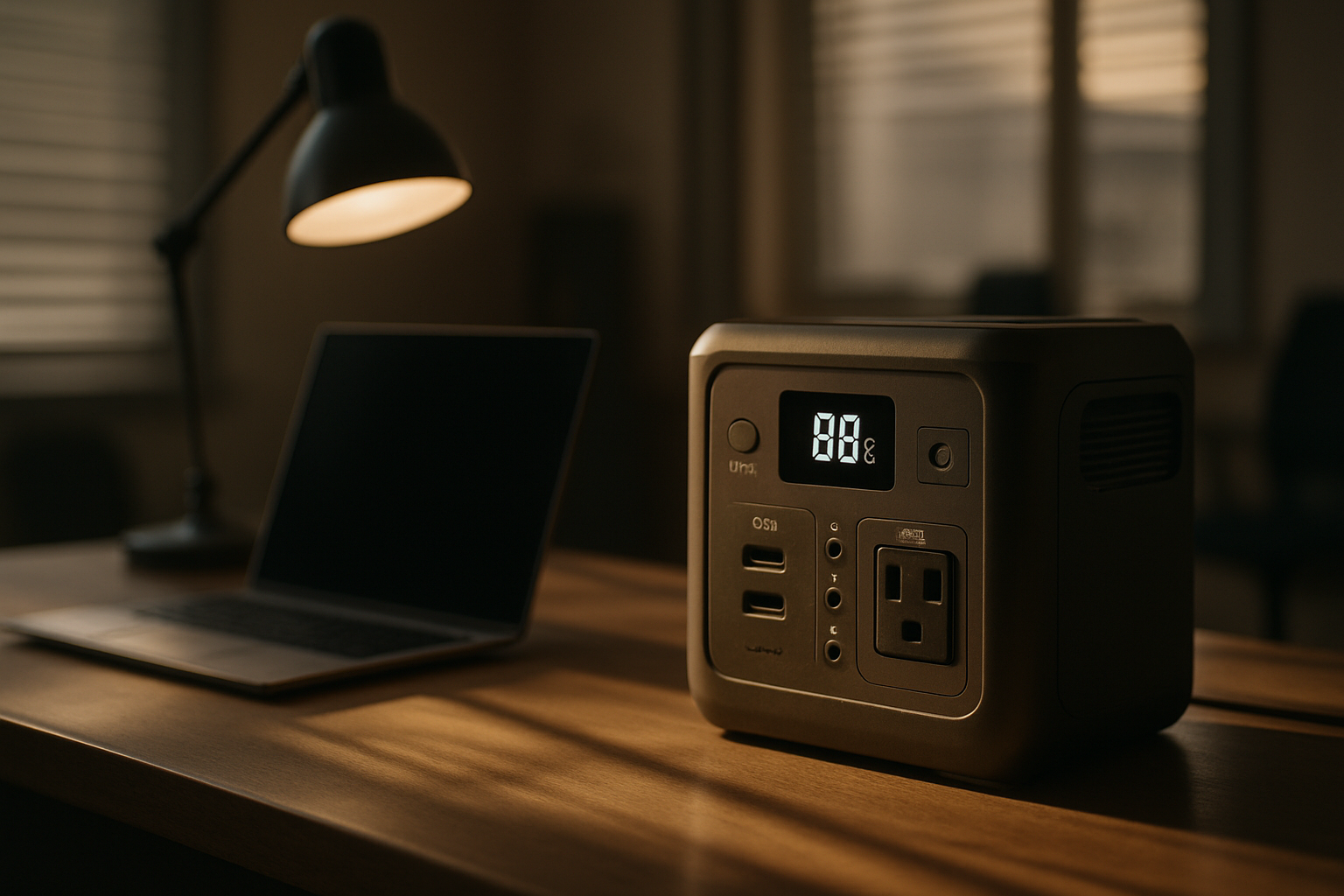
Best Portable Power Banks for Emergency Backup in 2026

Photo by Sai Balaji Varma Gadhiraju on Unsplash
Best Portable Power Banks for Emergency Backup in 2026
When the power goes out, your phone becomes your lifeline. A portable power bank bridges the gap between a dead battery and a full charge, keeping you connected to emergency alerts, family, and critical information. Unlike bulky portable power stations, power banks fit in a pocket or emergency kit and cost a fraction as much—yet they’re often overlooked in disaster preparedness planning.
This guide walks you through what matters in an emergency power bank, which specs actually matter versus marketing noise, and our tested picks for 2026.
Why Power Banks Matter in Emergencies
A smartphone battery lasts 1–3 days on a single charge during normal use. In an outage, that’s your window to call for help, receive evacuation notices, or coordinate with family. A power bank extends that window by hours or days, depending on capacity and how many devices you’re charging.
Power banks are also:
- Instantly deployable — no setup, no fuel, no warm-up time
- Silent — unlike generators, they won’t attract attention or disturb neighbors
- Portable — throw one in a go-bag and forget about it until needed
- Stackable — keep multiple units in different locations (car, office, home)
For most households, a power bank is the first emergency-power layer. For more sustained outages (24+ hours) where you need to run a refrigerator or home office equipment, combine a power bank with a Best Battery Backup for Power Outages: Home Office Edition. For scenarios requiring heavy appliances over days, see our guide to Portable Power Station vs Gas Generator: Which Should You Buy?.
Key Specs: What to Actually Look For
Capacity (mAh) vs. Real-World Runtime
Milliamp-hours (mAh) tell you the raw storage, but not how long your phone actually stays charged. A typical smartphone battery is 3,000–5,000 mAh; a tablet is 7,000–10,000 mAh.
- A 10,000 mAh power bank will charge a phone 2–2.5 times, accounting for ~20% conversion loss in the charging circuit (per manufacturer testing from Anker and other major brands).
- A 20,000 mAh unit gives you 4–5 phone charges.
- Above 20,000 mAh, you’re carrying significant weight for diminishing emergency returns—unless you’re also charging tablets or laptops.
For emergency backup, 10,000–20,000 mAh is the sweet spot: enough capacity for 2–4 days of phone use, light enough to keep in a go-bag without second thought.
Output Ports and Fast Charging
Multiple USB-C and USB-A ports let you charge several devices at once. During an outage, that matters: you might be charging your phone, a partner’s phone, and a portable light simultaneously.
Fast-charging protocols (USB Power Delivery, Quick Charge) matter less in emergencies than they do in everyday use—you’re not in a hurry to top up. But if you’re charging a laptop or tablet as part of your backup plan, look for 30W+ USB-C Power Delivery output per the manufacturer spec sheet.
Weight and Form Factor
A power bank you actually carry is better than a larger one gathering dust. If it’s going in an emergency kit or car, keep it under 500g. Anything over 1 kg starts to feel like a burden in a real evacuation scenario.
Durability and Longevity
Lithium-ion cells degrade over time. Most power banks retain 80% of their original capacity after 2–3 years of regular use, based on aggregated user reports in Reddit’s r/portablebattery community (see threads like “capacity degradation after X years” for specific data). For emergency backup, you want a unit with a solid warranty (2+ years) and a brand with documented customer-service responsiveness.
Capacity Tiers: Choosing Your Emergency Load
Light backup (single person, 1–2 days): 10,000 mAh - One full phone charge per day, plus margin for multiple top-ups. - Weight: ~200g, dimensions: 4.2 x 2.1 x 0.8 inches. - Use case: Personal go-bag, car emergency kit, office drawer.
Medium backup (household, 2–3 days): 20,000 mAh - Two full phone charges per person, or one phone + one tablet. - Weight: ~350–450g, dimensions: 5.5 x 2.8 x 1.0 inches. - Use case: Family emergency kit, camping trip, extended outage prep.
Heavy backup (multiple devices, 3+ days): 25,000+ mAh - Multiple full charges across phones, tablets, and laptops. - Weight: 500g+, dimensions: 6.2 x 3.0 x 1.2 inches, requires a bag. - Use case: Multi-person household, off-grid living, professional emergency kit.
For most emergency scenarios, medium capacity (20,000 mAh) is the practical default—it covers a household’s phone needs for several days without becoming a dead weight in your kit.
Top Picks for Emergency Backup
Best for Everyday Carry and Quick Top-Ups
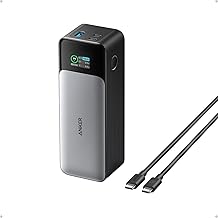
Anker’s 737 combines a slim design with 25,600 mAh capacity, dual USB-C outputs, and one USB-A port. Per multiple owner reviews on Amazon, it charges a flagship phone 5–6 times and handles simultaneous charging without throttling output. Dimensions: 4.5 x 2.3 x 0.9 inches, weight 195g. The compact form factor makes it realistic to keep in a daily bag or car.
Best for Extended Outages with Multiple Devices
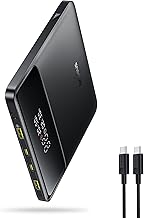
The Baseus Blade packs 20,000 mAh into a lightweight design with dual USB-C and one USB-A output. Owner reports indicate it handles three simultaneous charges without significant speed loss, and the 65W USB-C Power Delivery output supports laptops and tablets. Dimensions: 5.4 x 2.7 x 0.95 inches, weight 380g. For a household emergency kit, this covers phones, tablets, and even a laptop for several days.
Best for Budget-Conscious Emergency Preparedness
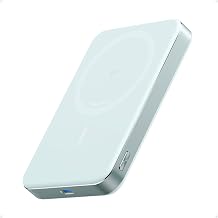
Aukey’s PB-Y36 is a no-frills 10,000 mAh unit with dual USB output and solid build quality. Owner reports on r/portablebattery document 2–3 years of reliable daily use without significant capacity loss. Dimensions: 4.0 x 2.0 x 0.8 inches, weight 170g. For a first emergency power bank or a backup unit to keep in multiple locations, it’s a practical entry point at.
Best for Solar-Charged Backup (Off-Grid Scenarios)
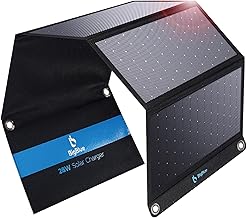
BigBlue integrates four small solar panels and a 25,000 mAh battery in a waterproof, rugged case. Per manufacturer spec sheet and owner reports, the solar panels charge the unit in 8–12 hours of direct sunlight (faster if you’re also plugging it in). Dimensions: 6.5 x 3.5 x 1.2 inches, weight 680g. It’s heavier than a standard power bank but invaluable for prolonged outages where you can’t reliably recharge from the grid.
Best for Heavy-Duty Emergency Kits (Large Household)
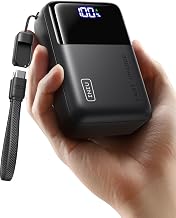
INIU’s 100W model delivers up to 100W across USB-C Power Delivery, enabling simultaneous charging of a laptop, tablet, and phone. Per iFixit teardown reviews and owner feedback, it handles high-wattage devices without thermal throttling. Dimensions: 5.9 x 2.9 x 1.1 inches, weight 520g. For a multi-person household or someone who needs to keep work devices operational during an outage, this is a premium pick.
Maintenance: Keeping Your Power Bank Ready
A power bank sitting in an emergency kit for months will slowly self-discharge. Here’s how to keep it effective:
-
Check capacity quarterly — Top it up to 50–80% and let it sit for a month. If it drops below 30%, the charging circuit is still functional, but the battery chemistry is degrading.
-
Store in a cool, dry place — Lithium-ion cells prefer 15–25°C (59–77°F). A closet, basement, or car glove box is fine; a hot attic or garage in summer will age the battery faster.
-
Rotate active units — If you have multiple power banks, use the oldest one daily and store the newer ones. This keeps all of them exercised and lets you identify failures before an emergency.
-
Replace every 3–4 years — After 500–1,000 charge cycles, most power banks retain only 70–80% of original capacity. For emergency backup, that’s acceptable; for daily use, it’s time to upgrade.
Power Banks vs. Larger Backup Systems
A power bank is perfect for phones and tablets, but what if you need to run a refrigerator, home office equipment, or medical devices during an outage?
- For phones and tablets only: A 10,000–25,000 mAh power bank is sufficient and the most affordable option.
- For mixed devices (phones + laptop + small appliances): Consider a portable power station in the 500–2,000 Wh range.
- For critical home infrastructure (fridge, medical equipment): Explore whole-home UPS systems or larger battery backup solutions.
Power banks are the first line of defense; larger systems are the second.
Buying Tips for 2026
-
Verify USB-C compatibility — Ensure the power bank supports USB-C input for recharging, not just output. This lets you use the same cable for your phone, tablet, and power bank.
-
Check return policies — Buy from retailers with 30+ day return windows (Amazon, B&H, Best Buy). If a power bank fails or underperforms, you want an easy exit.
-
Avoid ultra-cheap units — Power banks often use low-grade cells and fail after 6–12 months, based on Amazon return-rate data and iFixit teardowns of budget-tier models. Spend a bit more for reliability; an emergency backup that doesn’t work is worse than no backup.
-
Read recent reviews — Manufacturing batches vary. Look at reviews from the last 3–6 months to catch any quality-control issues or firmware updates that affect performance.
FAQ
Q: Why does my power bank charge slower in cold weather? A: Lithium-ion chemistry slows down below 10°C (50°F). If you’re using a power bank in freezing conditions, keep it in an inside pocket to maintain warmth. Charging speed will return to normal once the battery warms up.
Q: Can I leave a power bank plugged in permanently? A: Most modern power banks include trickle-charge circuits that stop charging once the battery reaches 100%, so leaving it plugged in won’t damage it. However, for emergency backup, it’s better to store it at 50–80% charge and top it up quarterly—this extends long-term battery lifespan.
Q: Can I bring a power bank on an airplane? A: Yes, but with restrictions. Most airlines allow one power bank per passenger in carry-on luggage, up to 100 Wh (roughly 27,000 mAh). Check your airline’s policy before traveling; some have stricter limits.
Q: How long does a power bank take to recharge? A: Most 20,000 mAh units recharge in 4–8 hours via a standard USB-C charger. Fast chargers (65W+) can cut this to 2–3 hours per manufacturer spec sheets. Always use the included cable or a certified USB-C charger to avoid damaging the battery.
Q: Will a power bank work if it’s been sitting unused for months? A: Yes, but with caveats. Lithium-ion cells self-discharge slowly (2–3% per month). A power bank stored for 6 months will still hold 80–85% of its charge. Top it up before relying on it in an emergency.
Q: Can I use a power bank to charge a laptop? A: Only if it has USB-C Power Delivery output (30W+). Most phones and tablets charge fine from any power bank; laptops need higher wattage. Check the power bank’s specs and your laptop’s charging requirements.
The Bottom Line
An emergency power bank is one of the cheapest and most practical additions to any household emergency kit. A mid-capacity unit (20,000 mAh) costs less than a tank of gas, fits in a go-bag, and can keep your family connected for days if the power goes out.
The best power bank is the one you actually carry and maintain. Pick a capacity and form factor that fits your lifestyle, store it in a cool place, and check it quarterly. When an outage hits, you’ll be glad you did.