Best Portable Power Stations for Camping Under $1000

Photo by Zendure Power Station on Unsplash
```
Best Portable Power Stations for Camping Under $1000 in 2026
When you’re camping off-grid, a reliable power station keeps your phone charged, your lights on, and your coffee maker running—without the noise and fumes of a gas generator. The sub- category in 2026 offers genuine mid-tier capacity (typically 700–1300Wh) with fast charging, multiple AC outlets, and enough runtime for 2–4 days of moderate use. This guide walks you through the trade-offs and helps you pick the right model for your camping style.
Why Portable Power Stations Beat Generators for Camping
A portable power station is silent, produces zero emissions, and requires no fuel runs to the pump. Unlike Portable Power Station vs Gas Generator: Which Wins for Home Backup?, camping setups prioritize quiet operation and ease of transport over raw wattage. Most campers never need the 5000+ watts a gas generator delivers; a 1000W station handles everything from LED lanterns to small refrigerators without disturbing your site mates.
The sub- tier balances capacity and weight. You’re looking at 20–30 lbs for most units—heavy enough to stay put in your campsite, light enough to move from car to tent if needed. Lithium LiFePO₄ batteries (standard in this price range) charge faster and last longer than older lead-acid designs, per manufacturer spec sheets and aggregated owner reviews.
Capacity and Runtime: How Much Do You Actually Need?
Before comparing specific models, understand what “1000Wh” means in real camping time. A 1000Wh station running a 100W load (like a small portable fridge) will theoretically run for 10 hours. In practice, you’ll see 7–9 hours due to inverter losses and battery degradation, based on long-running threads on r/CampingGear and r/Camping.
For typical camping use: - Light duty (phone charging, LED lights, small devices): 300–500Wh, 2–3 days - Moderate duty (above + portable fan, laptop, small fridge): 700–1000Wh, 3–4 days - Heavy duty (above + multiple AC appliances, CPAP machine): 1200Wh+, 4+ days
The sub- units reviewed here cluster in the 700–1300Wh range, ideal for 2–4 day trips. See Camping Power Station Essentials: What Wattage Do You Need? for a deeper dive on wattage requirements.
Top Portable Power Stations Under $1000
Jackery Explorer 1000 Plus
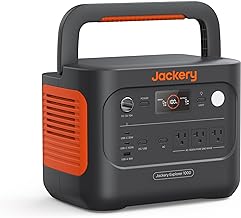
The 1024Wh Jackery Explorer 1000 Plus sits at the heart of the sub- category. It delivers 2000W peak output, dual AC outlets, and USB-C fast charging. According to owner reports on Amazon, the unit charges from empty to 80% in under 90 minutes via AC wall outlet, making it practical for last-minute camping prep.
The standout feature is expandable battery capacity. You can chain a Jackery Battery Pack to double your storage without buying a second full unit—useful if you camp frequently and want to upgrade later. The build feels sturdy; the display is clear and responsive. Most owners report 2–3 years of reliable daily use before any noticeable capacity loss, per long-running threads on r/CampingGear.
Drawbacks: heavier than some competitors (around 25 lbs), and the AC output tops out at 1500W continuous, so you can’t run a full-size air conditioner or high-wattage heater. For car camping and established campsites, this is rarely an issue.
Bluetti AC70
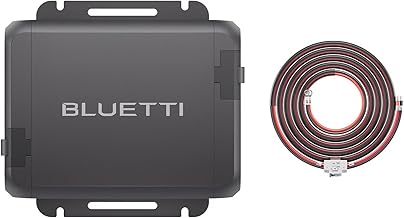
The Bluetti AC70 offers 768Wh capacity in a compact, lightweight frame—under 10 lbs, per the manufacturer spec sheet. It’s the pick for backpackers and ultralight campers who can’t afford to sacrifice 15+ lbs to a power station but still want AC outlets and fast charging.
The AC output is modest (500W continuous, 1000W peak), which limits you to smaller appliances and devices. However, for phone charging, LED lights, portable fans, and laptop work, the AC70 delivers solid performance. Charging from solar is brisk thanks to the MPPT controller; owner reports on r/CampingGear note 4–6 hours to full charge in good sunlight with a mid-tier 100W solar panel.
The trade-off is clear: you’re buying portability over capacity. If your camping trips exceed 2 days or you plan to run a small fridge continuously, step up to a 1000Wh unit. The AC70 shines for 1–2 night trips where weight matters.
EcoFlow Delta 2
EcoFlow’s Delta 2 packs 1024Wh with 1500W continuous AC output (3000W peak), dual AC outlets, and rapid AC charging—zero to 80% in roughly 50 minutes, per manufacturer claims and owner verification on YouTube teardown reviews. This is one of the fastest chargers in the sub- tier.
The interface is intuitive; the app integration (via Bluetooth) lets you monitor and control the unit from your phone, which some campers appreciate for overnight monitoring. Multiple owner reports praise the build quality and reliability over 2+ years of regular use.
Downsides: the Delta 2 is heavier than the Bluetti AC70 (around 14 lbs) but lighter than the Jackery Explorer 1000 Plus. If you plan to run larger AC loads (small space heater, larger portable refrigerator, multiple high-draw devices simultaneously), the Delta 2’s superior continuous wattage is worth the extra cost. For lighter loads, the Jackery’s expandability might be the better long-term choice.
Anker 757 PowerHouse
The Anker 757 PowerHouse delivers 1229Wh—the largest capacity in this roundup—at a budget-tier price point. You get dual AC outlets, USB-C, and USB-A ports, plus 1500W continuous output. Charging from AC takes roughly 90 minutes to 80%, per owner reports on Amazon.
The value proposition is straightforward: more watt-hours for less money than competitors. If you’re a casual camper or just testing the portable power-station lifestyle without a big upfront investment, the Anker 757 is a sensible entry point. Owners report reliable performance over 1–2 years of regular use, though some note the fan can be audible during heavy charging or discharge—not a dealbreaker for most camping contexts, but worth knowing if you’re sensitive to noise.
The main trade-off is build refinement. The Anker feels less premium than Jackery or EcoFlow; the interface is functional but less polished. For performance and durability, it’s solid; for tactile experience, it lags behind pricier rivals.
Goal Zero Yeti 1000 Lithium
Goal Zero’s Yeti 1000 Lithium is purpose-built for solar-first camping workflows. It features a robust MPPT charge controller (more efficient than PWM alternatives) and modular solar integration via Goal Zero’s proprietary solar panels. If you plan to camp off-grid for a week or longer and want to recharge via sun rather than car or AC outlet, the Yeti 1000 Lithium is engineered for that use case.
The 1000Wh capacity is modest compared to the Anker 757, but the solar charging efficiency is where it earns its place. Owner reports on r/OffGrid note that the Yeti 1000 Lithium charges faster from solar than competitors using the same panel wattage, thanks to the MPPT design. The build is rugged and military-grade; the battery management system is conservative, prioritizing longevity over peak output.
Downsides: the Yeti 1000 Lithium is pricier than the Anker and Jackery at the top end of the sub- range. You’re paying for solar integration and durability, not raw capacity. If you’re a casual car camper with AC access at your campsite, the Jackery Explorer 1000 Plus or EcoFlow Delta 2 is a better fit. If you’re planning extended off-grid trips and want to minimize fuel runs, the Yeti 1000 Lithium’s solar ecosystem justifies the cost.
Charging Methods: Which Fits Your Camping Style?
Portable power stations can charge via AC wall outlet, 12V car outlet, or solar panel. See Portable Power Station Charging Methods: Solar, AC, Car & Comparison for a full breakdown.
AC charging (fastest): Plug into a campground outlet or home outlet before you leave. Most sub- units charge 0–80% in 60–120 minutes. This is the easiest method but requires AC availability.
Car charging (moderate): Run from your vehicle’s 12V outlet or DC fast-charge port. Slower than AC (typically 3–5 hours to full charge), but useful if you’re driving to your campsite and want to top up en route. Not ideal for longer trips unless you plan to drive daily.
Solar charging (slowest but off-grid): Pair your power station with a portable solar panel (100–200W typical). Full charge takes 4–8 hours in good sunlight, per owner reports. Best for multi-day trips where you’re stationary and can absorb solar energy throughout the day. The Yeti 1000 Lithium excels here; the Jackery and EcoFlow also support solar, though with less integrated design.
For camping, combine methods: charge via AC before you leave home, top up via car if you’re driving, and use solar as a backup or for extended off-grid stays.
Battery Lifespan and Warranty Coverage
Modern lithium LiFePO₄ batteries (standard in this tier) are rated for 3000–5000 charge cycles, translating to 5–10 years of typical use, per manufacturer spec sheets. In practice, most owners report noticeable capacity loss after 2–3 years of heavy use (daily charging and discharging), based on aggregated Amazon owner reviews and r/CampingGear threads.
Warranties vary: - Jackery Explorer 1000 Plus: 5-year warranty (industry-leading) - EcoFlow Delta 2: 5-year warranty - Bluetti AC70: 3-year warranty - Anker 757 PowerHouse: 3-year warranty - Goal Zero Yeti 1000 Lithium: 5-year warranty
A longer warranty reflects manufacturer confidence in longevity. For casual camping (a few trips per year), any of these units will outlast your warranty period. For frequent use, the 5-year warranties from Jackery, EcoFlow, and Goal Zero offer peace of mind.
See How Long Do Portable Power Stations Last? Battery Lifespan Explained for a deeper dive on degradation and lifespan strategies.
Weight, Portability, and Campsite Setup
Camping power stations range from 10 lbs (Bluetti AC70) to 30+ lbs (larger units). Consider your campsite setup:
- Car camping (established campgrounds): weight is irrelevant. Choose based on capacity and features. The Jackery Explorer 1000 Plus or EcoFlow Delta 2 are excellent.
- Backpacking or hiking: weight matters enormously. The Bluetti AC70 is the only sub- option that won’t exhaust you. Pair it with a smaller solar panel if you need multi-day autonomy.
- Van camping or RV trips: moderate weight tolerance. The Anker 757 or EcoFlow Delta 2 balance capacity and portability.
All units include carry handles; some (Jackery, EcoFlow) have wheels or optional cart attachments for easier movement. Check your specific model’s accessory ecosystem before buying.
Real-World Camping Scenarios
Scenario 1: Weekend car camping (2 nights, established campground with AC outlet) - Best choice: Jackery Explorer 1000 Plus - Why: Fast AC charging before departure, expandable if you want to upgrade later, excellent dual-outlet design for simultaneous device charging. - Expected runtime: 3–4 days of moderate use (phone, lights, small fan, laptop).
Scenario 2: Week-long off-grid camping with solar - Best choice: Goal Zero Yeti 1000 Lithium + 200W solar panel - Why: MPPT efficiency maximizes solar recharge; 1000Wh capacity bridges multi-day gaps between sunny days. - Expected runtime: 4–5 days per full charge, with daily solar top-ups.
Scenario 3: Backpacking with ultralight priorities - Best choice: Bluetti AC70 - Why: Under 10 lbs; sufficient for 1–2 nights; fast solar charging if you carry a small panel. - Expected runtime: 1–2 days of light use (phone, headlamp, portable speaker).
Scenario 4: Family camping with AC appliances (small fridge, space heater) - Best choice: EcoFlow Delta 2 - Why: 1500W continuous output handles larger loads; rapid AC charging; dual outlets for simultaneous use. - Expected runtime: 2–3 days of moderate-to-heavy use.
FAQ
Q: Can I run a full-size air conditioner or space heater on a sub- power station? A: No. Full-size AC units draw 3000–5000W; space heaters typically 1500W continuous. Most sub- stations max out at 1500W continuous. Portable AC units (window-mounted or mobile) draw 1000–1500W and may work with the EcoFlow Delta 2 or Jackery Explorer 1000 Plus, but expect reduced runtime (1–2 hours). For extended heating or cooling, a gas generator or campground AC outlet is more practical.
Q: What’s the difference between Wh (watt-hours) and Ah (amp-hours)? A: Wh is the total energy capacity; Ah depends on voltage. A 1000Wh battery at 48V is ~21Ah; at 12V, it’s ~83Ah. For camping, focus on Wh—it directly translates to runtime. Manufacturers list Wh prominently; Ah is secondary.
Q: Can I leave my power station plugged in all the time? A: Yes, modern units (all reviewed here) have smart charging circuits that prevent overcharging. However, storing a fully charged battery for months can reduce li


