Portable Power Station Charging Methods in 2026

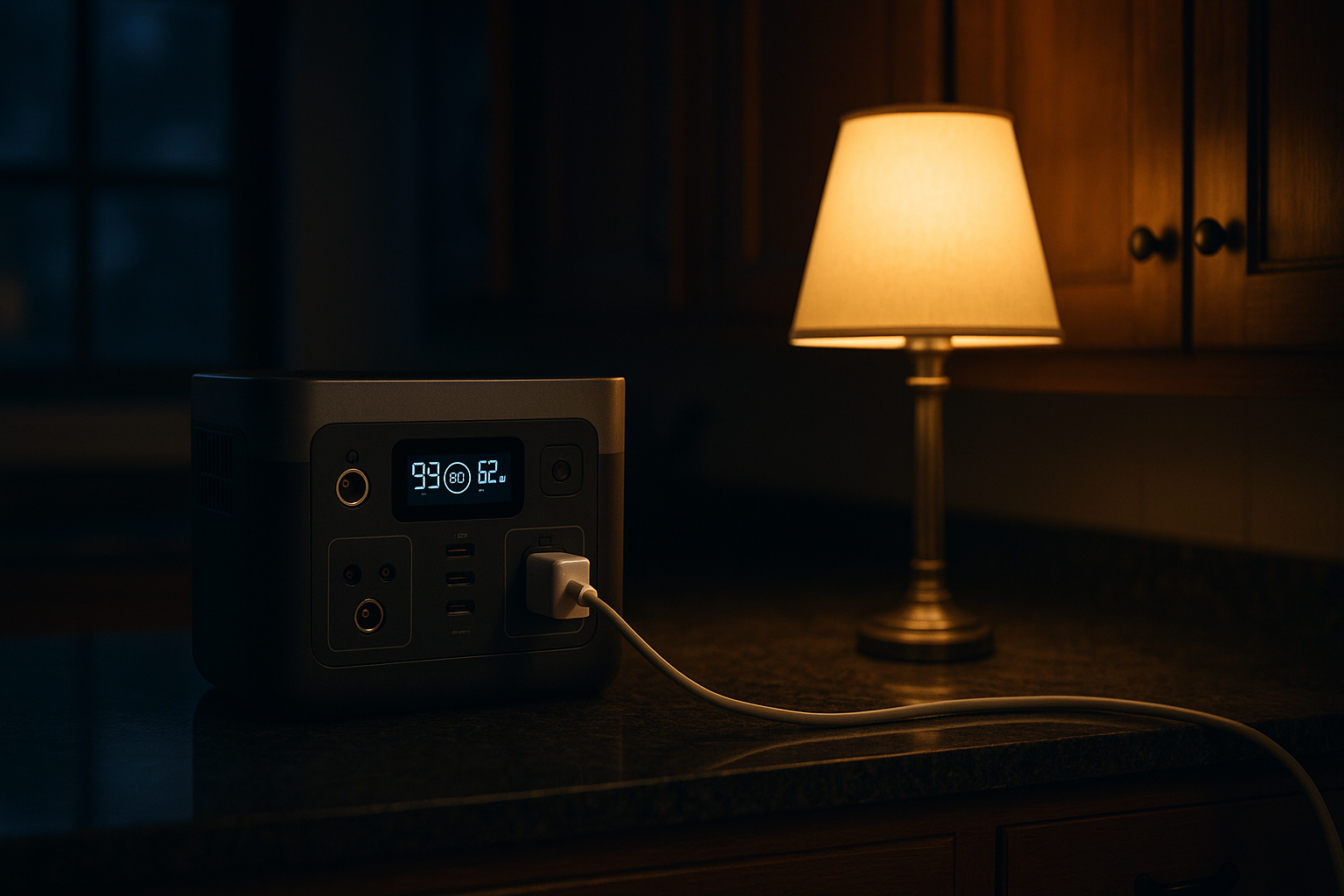
Photo by Jackery Power Station on Unsplash
How to Charge a Portable Power Station: Solar, AC, Car & Hybrid Methods
Choosing the right charging method for your portable power station determines how fast you can deploy it and whether you’ll have power when the grid fails. Each method—AC outlet, solar panel, car charger, or combination—offers different speed and independence trade-offs. This guide compares each option so you can select the setup that matches your actual use case.
AC Outlet Charging: The Fastest Method
Plugging a portable power station into a standard wall outlet is the quickest way to refill its battery. Most modern units accept 1000W to 2000W AC input. A mid-capacity station (2000Wh) recharges in 2–4 hours at 110V; models with 240V input or dual AC ports cut this to 1–2 hours.
Why it’s fast: AC power delivers high wattage directly to the battery management system without conversion losses. The onboard charger handles voltage regulation efficiently.
Trade-offs: You need grid access. If the grid fails, AC charging stops immediately, defeating the purpose for outage backup. You’re also stationary during the recharge window.
Real-world timing: At 110V, expect 2–4 hours for 2000–3000Wh units based on manufacturer specifications. At 240V (where available), dual-input models like the Bluetti AC500 deliver 3000W per port, enabling full recharge in 1–2 hours for large batteries.
How to Choose a Backup Power Station for Your Home Office
Solar Panel Charging: The Independent Path
Solar charging refills your station anywhere the sun shines—no grid, car, or outlet required. Most units accept 200W to 1600W of solar input via an onboard charge controller.
How it works: Solar panels (typically 100W to 400W individual units) connect via MC4 connectors to the station’s solar input port. The charge controller regulates voltage and current to protect the battery.
Speed reality: Under peak sun conditions (1000W/m² at solar noon), a 400W solar array delivers approximately 320W of actual charging power to the station after accounting for panel efficiency losses (typically 15–20% below rated output) and controller conversion losses. A 2000Wh station requires roughly 6–8 hours for full charge on a clear day. Cloudy conditions reduce output by 50–80%; morning or late-afternoon sun cuts effective power by 30–50%.
Advantages: - True off-grid capability; no infrastructure dependency. - Panels are reusable across multiple stations. - Extended deployment windows in remote settings.
Disadvantages: - Slower than AC or car charging. - Weather-dependent; winter or cloudy climates reduce output significantly. - Requires unobstructed sky exposure and space for panel array. - Panel quality varies; cheap panels underperform rated specs by 20–30%.
Best Portable Power Stations for Camping Under $1000
Car/12V Charging: Convenient for Road Use
Charging via a vehicle’s 12V outlet (or direct battery connection) is ideal for road trips and camping. Most stations include a 12V car charger cable that plugs into a standard cigarette lighter socket or connects to vehicle battery terminals.
Speed: 12V charging is slow—typically 50–200W depending on the station’s design and the vehicle’s electrical capacity. A 2000Wh station requires 12–24 hours for full charge, making it impractical for rapid top-ups. It works best as a maintenance tool during multi-day trips.
Practical use: 12V charging works best while driving or with the engine running. Leaving a station plugged in for 4–6 hours of driving typically gains 20–50% charge. It’s a secondary method, not a primary recharge strategy.
Advantages: - Works anywhere you have a vehicle. - Passive charging while driving. - No additional equipment beyond the included cable.
Disadvantages: - Very slow for full recharge. - Strains older vehicle electrical systems. - Requires engine running (fuel cost, emissions).
Portable Power Station for Camping: Capacity & Features Explained
Hybrid Charging: Combining Methods for Speed & Flexibility
The most practical setups combine two or three charging methods. AC plus solar enables fast home recharge and field maintenance. AC plus 12V provides grid backup and road capability.
Common hybrid strategies:
AC + Solar (best for home + camping): Charge fully at home via AC in 2–4 hours, then maintain via solar while camping. This reduces dependency on any single method. Models supporting 1000W+ AC input and 400W+ solar input are the practical sweet spot.
AC + 12V (best for urban/road users): Fast recharge at home, maintain charge while driving. Useful for city dwellers who travel frequently.
All three (AC + Solar + 12V): Premium models like the EcoFlow Delta Pro and Bluetti AC500 + B300S support all three, providing maximum flexibility at higher cost and complexity.
Charging Speed Comparison Table
| Method | Typical Power | Full Charge Time (2000Wh) | Conditions/Notes |
|---|---|---|---|
| AC (110V) | 500–1000W | 2–4 hours | Standard outlet; varies by unit design |
| AC (240V) | 1000–2000W | 1–2 hours | Dedicated outlet; not available everywhere |
| Solar (400W array) | 320W actual | 6–8 hours | Peak sun (1000W/m²) at solar noon; 15–20% efficiency loss |
| 12V Car | 50–200W | 12–24 hours | Engine running; strains vehicle electrical system |
| AC + Solar (parallel) | 1300–1400W | 1.5–3 hours | Requires dual-input capable unit |
Speeds assume manufacturer spec compliance and ideal conditions. Real-world results vary with battery health (older units charge 10–20% slower), ambient temperature (optimal 50–95°F), cable quality, and simultaneous load.
Factors That Affect Charging Speed
Battery age: Lithium batteries degrade over charge cycles. Units over 3 years old or with 500+ charge cycles typically charge 10–20% slower than new units, per manufacturer battery degradation curves.
Ambient temperature: Cold slows charging; heat triggers thermal throttling. Most stations operate optimally between 50–95°F (10–35°C). Below 32°F, charging may halt entirely.
Input cable quality: Damaged or undersized cables lose power in transmission. Using the manufacturer’s included cable ensures rated speeds.
Charge controller firmware: Some stations receive firmware updates improving efficiency. Check for updates before trips.
Simultaneous load: Drawing power while charging reduces net charge rate. If charging at 1000W and drawing 500W, the battery gains only 500W net.
How Long Do Portable Power Stations Last? Battery Lifespan Explained
Choosing the Right Charging Method for Your Situation
If you’re primarily stationary (home office, emergency backup): AC charging is your baseline. Choose a unit with at least 1000W AC input for reasonable recharge windows. Add solar as secondary for true outage resilience; solar keeps you charged if the grid is down for days.
If you camp or travel frequently: Solar plus AC is ideal. Charge fully at home, then rely on solar in the field. 12V charging is a bonus for road trips. Look for units with 400W+ solar input capacity.
If you’re always on the move (RV, van life, nomadic work): Prioritize AC plus 12V plus solar in that order. Charge at campsites or homes (AC), maintain during drives (12V), and supplement with solar on sunny days.
If you want simplicity: AC-only is sufficient for most people. It’s the fastest and most reliable method. Add solar only if you genuinely spend time off-grid.
Best Practices for Charging Your Power Station
-
Charge at moderate temperature: Avoid charging in extreme heat or cold. Most stations perform best between 50–95°F.
-
Use the included charger or certified replacement: Third-party chargers may not match the station’s input specifications and risk battery damage.
-
Don’t leave fully charged for extended periods: Lithium batteries degrade faster at 100% state of charge. For storage longer than one month, charge to 50–80% per manufacturer guidance.
-
Combine methods when possible: If you have AC and solar available, use both in parallel (if the station supports it) to cut recharge time significantly.
-
Keep solar panels clean: Dust, dirt, and pollen reduce solar output by 10–30%. Wipe panels before extended off-grid trips.
-
Monitor battery health: Most modern stations display battery cycle count or health percentage. Track this to anticipate capacity decline.
Best Expandable Power Station for Growing Needs
FAQ
Q: Can I charge a portable power station with any solar panel? A: No. The panel must match the station’s input voltage and connector type (usually MC4). Using incompatible panels risks damaging the charge controller. Verify the panel’s output voltage (typically 18V–60V) against your station’s solar input specification before purchasing.
Q: Is it safe to charge while using the power station? A: Yes, but it reduces net charging speed. If charging at 1000W and drawing 500W simultaneously, the battery gains only 500W. Most stations handle this automatically; check your manual to confirm.
Q: How long does a solar panel last? A: Quality solar panels (200W–400W) typically last 20–30 years in outdoor use, with gradual efficiency decline of 0.5–1% per year. Budget panels may degrade faster. Panels don’t “wear out” like batteries; they lose output capacity very slowly.
Q: What’s the best way to charge a power station for long-term storage? A: Charge to 50–80%, then store in a cool, dry place (50–75°F ideally). Top up to this level every 3–6 months if stored longer than one year. Storing at full charge accelerates degradation.
Q: Can I use a portable power station to charge itself via solar while it’s powering devices? A: Yes. The station’s charge controller manages incoming solar power separately from battery discharge. If solar input is 400W and device load is 300W, the battery gains 100W net. This is useful for maintaining charge during extended off-grid use.
Summary
Portable power station charging methods each serve different needs. AC outlet charging is fastest for home use, solar offers independence for off-grid scenarios, 12V car charging provides convenient maintenance on the road, and hybrid setups maximize flexibility. Your choice depends on where you use the station and how quickly you need it ready. Most users benefit from AC as the primary method with solar as a secondary for camping or extended outages. For deeper guidance on selecting a station that fits your charging needs, see How to Choose a Backup Power Station for Your Home Office.