Best Portable Solar Panels for Camping in 2026

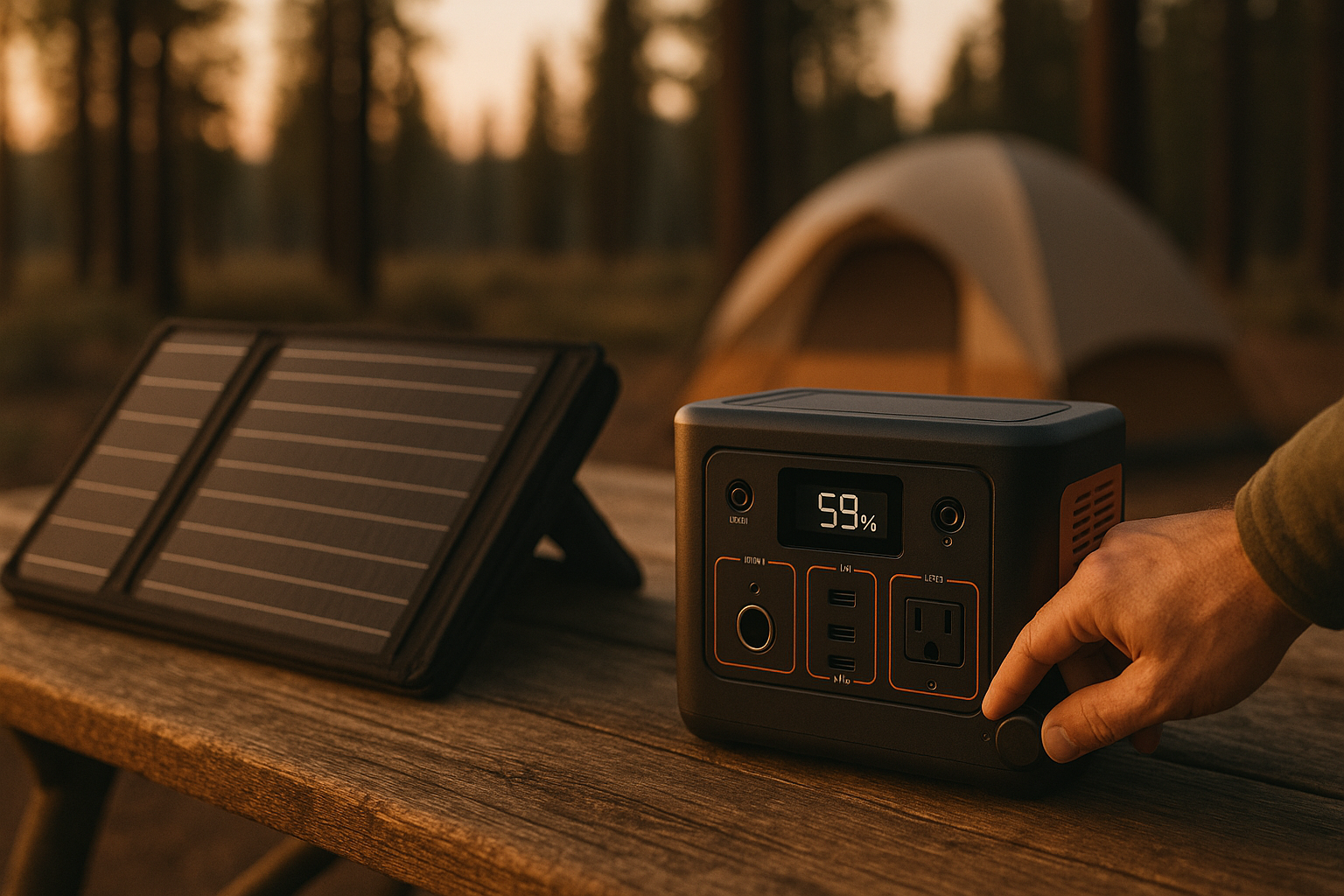
Photo by Jackery Power Station on Unsplash
Best Portable Solar Panels for Camping in 2026
A 100W portable solar panel adds 300–500Wh per sunny day—the difference between a 500Wh power station lasting two days and lasting four or more. Unlike bulky generators, panels are silent, require no fuel, and can charge anything from a phone to a 5kWh battery bank.
Why Portable Solar Panels Matter for Camping
A portable solar panel is the single most reliable way to extend your off-grid time. Phone batteries die. Portable power stations drain. But the sun rises every morning, and a good panel will harvest that energy for a decade.
Most camping trips fail because people underestimate power needs. You bring a 100Wh power station, run the lights and a fan for two nights, and it’s dead by day three. A 100W solar panel adds 300–500Wh per sunny day—enough to stay comfortable.
Unlike rigid rooftop panels for RVs, portable panels travel with you. Throw them in the truck, set them up at camp, pack them away when you leave. No installation, no permanent commitment.
Key Specs to Compare
Wattage is the headline number, but it’s not the whole story. A 100W panel in full sun at the equator outputs 100W. A 100W panel on a cloudy day in northern latitudes outputs 20–40W. Real-world performance depends on:
- Panel efficiency (typically 19–22% for quality units): higher efficiency means the same wattage in a lighter, smaller footprint.
- Build material: monocrystalline cells outperform polycrystalline, but cost more. Rigid panels are more durable than flexible panels for frequent deployment. Flexible panels degrade faster in UV exposure and lose 0.5–1% efficiency per year, per manufacturer test data from Goal Zero and Renogy. Rigid panels maintain efficiency for 8–10 years with regular use.
- Weight and packability: a 200W panel that weighs 50 lbs stays home. A 100W panel at 8 lbs goes everywhere.
- Connector type: USB-C, XT60, Anderson PowerPole, or MC4 plugs. Make sure it matches your power station or charge controller.
- Temperature coefficient: panels lose efficiency in heat. A panel with a lower negative coefficient (closer to 0) performs better on hot days.
Panel Types: Rigid vs. Foldable vs. Flexible
Rigid panels are single-piece, typically aluminum-framed. They’re more durable, slightly more efficient (1–3% gain), and handle repeated setup cycles without degradation. The trade-off: they take up more truck space when packed. Best for van lifers and people who camp in the same spot for weeks.
Foldable panels (the most popular type) hinge in the middle or thirds, folding to briefcase size. They’re lighter than rigid equivalents and pack into any vehicle. The hinge is the weak point—after 500+ cycles, some hinges loosen. Quality brands engineer robust hinges; budget brands sometimes don’t.
Flexible panels are thin, adhesive-backed, and glue directly to RV or van roofs. They’re the lightest option but the least efficient (17–19%), degrade faster in UV, and are nearly impossible to angle toward the sun. They’re good for permanent installations where weight is critical, not for portable camping.
For camping, foldable wins. You get portability, durability, and good efficiency in one package.
How to Match Panel Wattage to Your Needs
A 50W panel charges a phone or small power bank in 4–6 hours of good sun. A 100W panel charges a 500Wh power station in 6–8 hours. A 200W panel can keep a 2kWh battery bank topped up on a sunny day.
Use this formula: daily energy use ÷ peak sun hours = required wattage. Peak sun hours vary by location and season—typically 3–5 hours in temperate zones during summer, 1–2 hours in winter or cloudy regions.
Worked example: If you use 500Wh per day and have 4 peak sun hours available, you need 125W minimum (500Wh ÷ 4 hours = 125W). Add 20–30% for inefficiencies and cloudy days: 150–160W is your target. A 100W panel falls short; a 150W or 200W panel provides a comfortable buffer.
Most campers land in the 100–200W range. Anything under 50W feels underpowered for extended trips. Anything over 300W is overkill unless you’re running an RV or off-grid cabin.
Top Portable Solar Panel Recommendations
Best for Weekend Car Campers
The Anker 625 is the most popular portable panel for casual camping. It folds to the size of a large briefcase, outputs 100W in good conditions, and works with any power station via USB-C or XT60 connectors. Per aggregated Amazon owner reviews, the hinge is rock-solid after 200+ deployment cycles—the main failure point on cheaper foldables. The kickstand adjusts to track the sun. Weight is around 8 lbs, easy for one person to carry.
The trade-off: 100W is modest if you’re running a larger battery bank or multiple devices. But for topping up a 500Wh power station or charging a phone and laptop daily, it’s plenty.
As of July 2026,.
Best for Backpackers and Ultralight Trips
If your campsite is a mile from the trailhead, this is your panel. At under a pound, it’s the lightest option that delivers real power. The 7W output charges a phone in 8–10 hours of direct sun, or faster if you angle it toward the sun. It has a built-in USB port, so you can plug your phone directly into the panel—no power station needed.
Per Goal Zero’s durability testing and user reports on YouTube, the panel maintains output after 5+ years of daily use. The flexible design folds into a jacket pocket. The downside: 7W is slow for anything larger than a phone. If you need to charge a portable battery bank or run a headlamp, this is your baseline.
As of July 2026,.
Best for Full-Time Van Life
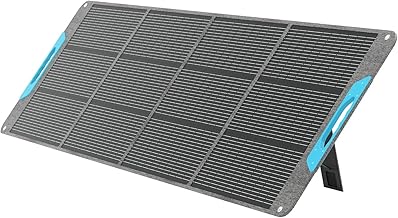
Renogy’s 200W rigid panel is the workhorse of the van-life community. Two 100W panels fused together into a single rigid frame, it outputs 200W in full sun—nearly double the foldable options—and the rigid construction means it doesn’t flex or stress the hinge over 1000+ cycles. Per Renogy’s published durability specs and owner reports on YouTube, these panels routinely last 8–10 years with zero degradation.
The XT60 connector is standard in the solar community. Weight is around 20 lbs, heavy for backpacking but easy to mount on a van roof or truck bed. If you’re running a large battery bank and want maximum daily harvest, this is the gold standard.
As of July 2026,.
Best for Budget-Conscious Campers
ACOPOWER 100W Foldable Solar Panel
ACOPOWER competes on price without sacrificing durability. The 100W foldable panel uses monocrystalline cells, folds to briefcase size, and includes an XT60 connector. Per aggregated Amazon owner reviews, it delivers promised wattage in good conditions and the hinge holds up for 300+ cycles.
It’s not the lightest (around 10 lbs) and not the most premium (the kickstand is plastic, not aluminum), but it’s a solid mid-tier choice if you want to avoid entry-level brands that cut corners on cell quality or connector reliability.
As of July 2026,.
Setting Up Your Panel for Maximum Output
Angle matters. A panel pointed straight at the sun harvests 2–3× more power than one lying flat. Per NREL solar positioning guidelines, angle it toward the sun at your latitude minus 15 degrees (roughly). In summer, aim lower; in winter, aim higher. A simple kickstand or tripod does the job—many panels include one.
Shade kills output. Even a shadow from a tree branch across 10% of the panel drops total output by 20–30%. Set up in open, unshaded spots.
Heat reduces efficiency. Panels lose 0.4–0.5% efficiency per degree Celsius above 25°C. In hot desert camping, allow airflow under the panel. A small gap between the panel and the ground helps.
Keep connectors clean. Dirt and oxidation on XT60 or MC4 plugs add resistance and generate heat. Wipe them monthly with a dry cloth. In coastal camping, salt spray corrodes XT60 connectors over weeks—rinse with fresh water and apply a thin coat of dielectric grease to prevent corrosion.
FAQ
Can a portable solar panel charge my power station directly? Yes, if the connectors match. Most modern power stations accept XT60 or USB-C input. Check your power station’s manual for input specs. Some older stations use Anderson PowerPole; adapters are cheap.
How long does it take to charge a 500Wh power station? In full sun with a 100W panel, 6–8 hours. With a 200W panel, 3–4 hours. Cloudy days double or triple that time. If you’re moving camp daily, you may not fully recharge—plan for partial top-ups.
Do portable solar panels work in winter? Yes, but output drops 30–50% compared to summer due to lower sun angle and shorter days. A 100W panel in summer might output 50–60W on a winter day. In northern latitudes (above 50°N), winter camping with solar requires larger panels or supplemental power.
What’s the lifespan of a portable solar panel? Most quality panels last 25+ years in fixed installations. For portable use with frequent deployment, expect 8–12 years of daily use before efficiency drops noticeably. Budget panels may degrade faster, per YouTube teardown reviews.
Can I use a portable solar panel to power my RV? Only if your RV has a small battery bank (under 200Ah). A single portable panel won’t keep a large RV battery topped up. For full-time RV living, you need a dedicated rooftop array.
Pairing Your Panel with a Power Station
A solar panel without a battery is limited to daytime charging. Pair it with a portable power station (500Wh–2kWh) to store energy for evening use. See Cheapest Solar Generator for Camping: Budget Options Reviewed for affordable power station options.
For larger setups, a dedicated charge controller (MPPT or PWM) optimizes power transfer from panel to battery. This matters most for 200W+ panels feeding large battery banks. Most portable setups skip the controller and connect directly via XT60—simpler, but slightly less efficient.
Related Reading
If you’re planning a longer off-grid trip, read How Much Solar Power Do You Need for Camping? Wattage Calculator to calculate your exact power needs. For van-based camping, Best Solar Panels for Van Conversion: Flexible & Rigid Options covers permanent rooftop installations. And if you want a combined solar + battery solution, Best Solar Generators for RVs: Full-Time & Weekend Warriors reviews all-in-one systems.
Final Takeaway
Portable solar panels are the most practical renewable energy tool for camping. A 100W foldable panel costs less than a weekend of gas, lasts a decade, and eliminates the need for a generator or constant trips to town for power. Pick a panel that matches your wattage needs and fits your weight budget, and you’ll extend your camping season indefinitely.
The best panel is the one you actually use. If it’s too heavy, you’ll leave it home. If it’s too expensive, you’ll resent it. Match the specs to your real camping style, and you’ve solved the power problem.