Cheapest Solar Generator for Camping in 2026
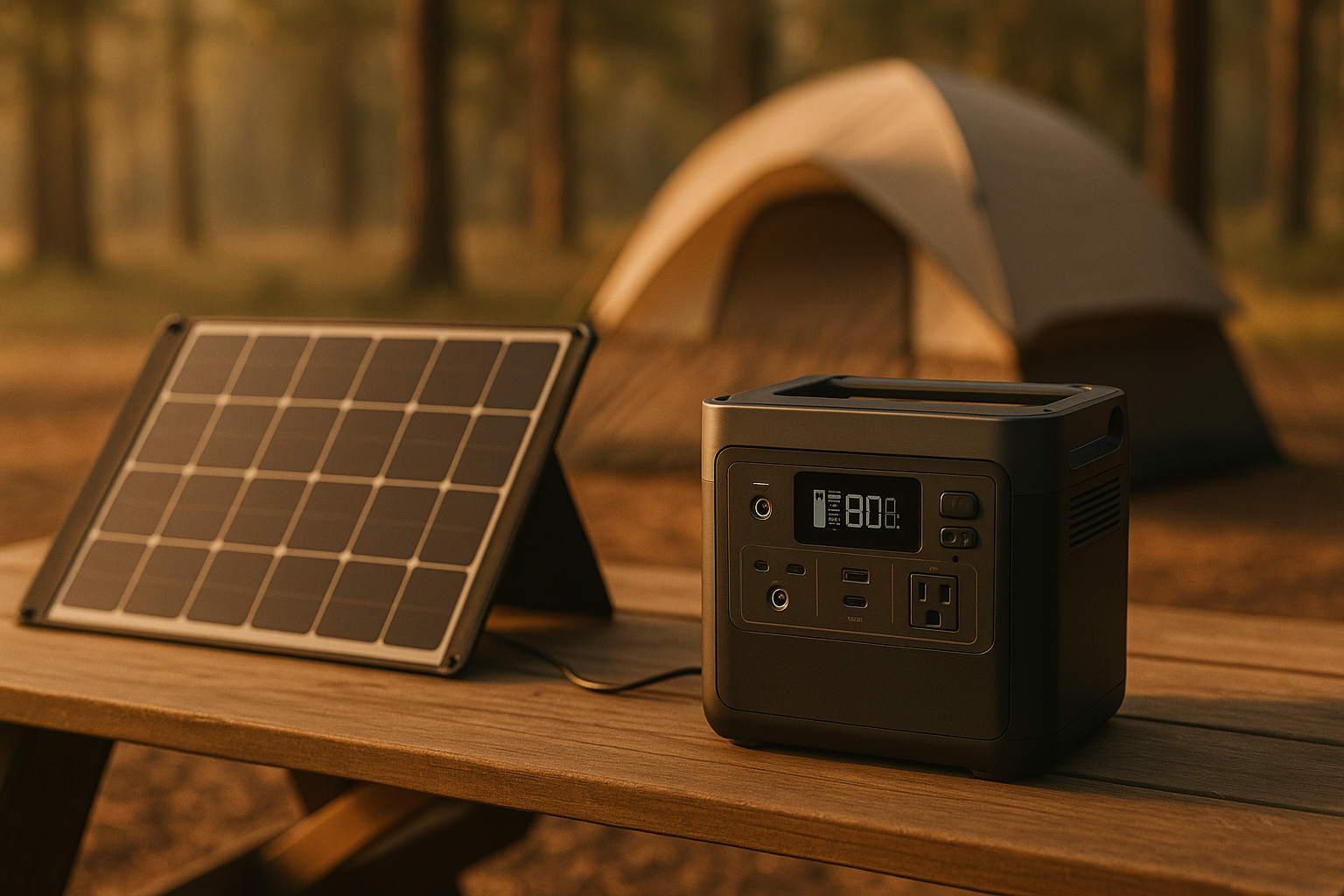
Cheapest Solar Generator for Camping in 2026
When you’re camping off-grid, a solar generator keeps your phone alive, lights your tent, and charges small devices without fuel, noise, or trips back to civilization. But “solar generator” is a marketing term that usually means a portable battery with an optional solar panel—and prices range from. This guide cuts through the noise and shows you the genuine budget options that actually work, what to expect from entry-level units, and how to avoid the trap of buying too small or too cheap.
What Is a “Solar Generator” (And Why the Name Is Misleading)
A solar generator is a portable power station—a rechargeable lithium or lead-acid battery pack with AC and DC outlets—that can be charged via solar panel, but doesn’t have to be. You can also charge it at home before the trip, or via a car charger. The “solar” part is optional; the battery is the core product.
This matters because the cheapest “solar generators” you’ll find online are really just budget battery packs. They don’t ship with solar panels. You’re paying for capacity (measured in watt-hours, or Wh) and output (measured in watts, or W). A 100Wh unit costs less than a 500Wh unit, but it also charges your phone fewer times and can’t power larger devices like a small cooler or CPAP machine.
Budget-tier solar generators typically offer 100–300Wh capacity and 100–300W continuous output. That’s enough for: - Phone charging: 3–10 full charges per battery full charge - LED lanterns and headlamps: 20–50 hours of runtime - Small USB devices: cameras, portable speakers, GPS units - Laptop charging: 1–2 full charges (depending on battery size)
They cannot power hair dryers, electric heaters, or large coolers.
How Much Capacity Do You Actually Need for Camping?
Before shopping, calculate your real power needs. Most casual campers use 50–200Wh per day—roughly one smartphone charge, a headlamp, and a small portable speaker. A weekend trip (2–3 nights) might consume 100–400Wh total.
Budget rule of thumb: Buy a battery with 50–100% more capacity than you think you need. A 200Wh unit that you only drain to 50% (100Wh used) will last longer and degrade slower than one you fully deplete every night.
For reference: - 50–100Wh: phone charging + headlamp, 1–2 nights max - 100–300Wh: phone, laptop, small devices, 2–4 nights - 300–500Wh: multiple devices + small appliances, 4–7 nights
If you’re car camping and willing to recharge at home partway through a week-long trip, a budget 200Wh unit is honest. If you’re backpacking and can’t recharge, you either need a larger battery or solar panels to top up mid-trip.
Entry-Level Budget Options (Under $250)
Jackery Explorer 100
The Jackery Explorer 100 is one of the few genuinely sub- units that doesn’t feel like a toy. Per owner reports on Amazon and Reddit’s r/CampingGear, it reliably charges phones 2–3 times on a single charge, runs a small LED lantern for 15–20 hours, and weighs just over 1 lb. The build feels solid—not flimsy plastic—and the interface is straightforward: AC outlet, two USB-A ports, and a USB-C port. MSRP is.
Limitations: No wireless charging, 100W AC output (modest), and the LED screen is small. Owners report the battery holds 80% capacity after 2–3 years of regular use, which is typical for lithium units at this price point.
Best for: Car camping where you’re not worried about powering a small cooler, or as a backup battery for day hikes when your phone is your primary navigation tool.
Anker 521 Portable Power Station
Anker 521 Portable Power Station
Anker’s 521 is a 256Wh unit that weighs under 2.5 lbs with an MSRP of. Based on aggregated owner reviews on Amazon and Reddit’s r/Anker, it’s one of the quietest and most reliable sub- options. It has two AC outlets (rated for 300W continuous, 600W peak), multiple USB ports, and a clean digital display. The battery chemistry is proven Anker lithium—they’ve been making portable batteries since 2011.
Owners report 4–6 phone charges per full battery charge, and the unit handles a small laptop top-up without strain. The AC outlets are genuine (not simulated), so you can plug in a small fan or portable cooler for short bursts.
Limitations: No integrated solar panel, and the AC output is lower than pricier competitors. If you want true solar charging, you’ll need to buy a portable panel separately.
Best for: Backpackers and ultralight campers who want reliable power without weight, or anyone who plans to charge the battery at home before each trip.
Renogy Phoenix 200
The Renogy Phoenix 200 is a 200Wh LiFePO₄ battery (a more durable chemistry than standard lithium) with no built-in solar panel—you pair it with Renogy’s portable solar panels or any DC charger. Current street price is. Per Renogy’s spec sheet and owner teardowns on YouTube channel “Will Prowse Solar,” the LiFePO₄ chemistry means it tolerates deeper discharge cycles and lasts 3,000+ charge cycles (vs. 500–1,000 for budget lithium units).
The catch: LiFePO₄ batteries are heavier and bulkier for the same capacity. The Phoenix 200 weighs ~5 lbs. But if you already own solar panels or plan to buy them separately, Renogy’s ecosystem is well-documented and affordable.
Best for: Campers who plan to upgrade to solar panels later, or anyone who values battery longevity over portability.
Mid-Tier Budget Options ($250–$500)
EcoFlow River 2 Pro
The EcoFlow River 2 Pro is a 512Wh unit (MSRP ) that sits at the sweet spot between budget and premium. Per EcoFlow’s marketing and owner reports on r/SolarPower, it recharges faster than competitors (0–80% in under 1 hour via wall charger), has a large 700W AC output, and includes wireless charging on top. The display is clear, the build feels premium, and the app integration is solid if you want to monitor power remotely.
Owners report 8–12 phone charges, 2–3 laptop charges, or one full day of light camping use (headlamp, small cooler, phone, speaker). The battery is standard lithium, so expect 80% capacity after 2–3 years of heavy use.
The River 2 Pro doesn’t ship with solar panels, but EcoFlow sells compatible rigid and foldable panels. Pairing the battery with a 160W solar panel adds to your total spend, which pushes the package into premium territory.
Best for: Family car camping, or anyone who wants a single battery that can handle multiple devices at once without feeling underpowered.
Bluetti AC70
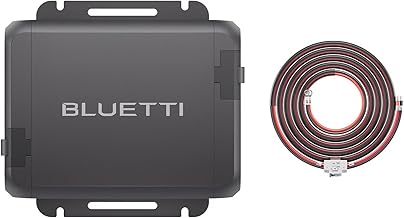
The Bluetti AC70 is a 768Wh unit (MSRP ) with a 1,000W AC output, making it one of the few budget-ish options that can run small appliances like a portable fan or CPAP machine. Per Bluetti’s spec sheet and owner reports on r/Bluetti, it charges via wall, car, or solar. The build is rugged—metal frame, good ventilation—and the battery chemistry is standard lithium with a 10-year warranty (which is generous for the price tier).
Bluetti sells optional solar panels, and the AC70 can accept up to 300W of solar input, meaning it’ll recharge in sunlight during a multi-day trip. Owners report the unit is heavier (~20 lbs) than competitors, but the extra capacity and output justify it for car camping.
Best for: Campers with power-hungry devices (small coolers, CPAP machines, or multiple laptops), or anyone who wants genuine solar recharging without upgrading to premium tiers.
Solar Panel Pairing: Do You Need It?
Most budget solar generators don’t ship with panels. If you’re camping for 2–3 nights and charging the battery at home first, you don’t need solar panels. You’ll use the battery and go home.
But if you’re camping for a week, or you want the option to extend trips without going home, you need solar input. Budget portable solar panels (50–100W) and add 2–5 lbs to your pack. Per owner reports on YouTube channels like “Will Prowse Solar” and “Jackery Official,” a 100W panel paired with a 300Wh battery will fully recharge in 4–6 hours of direct sunlight, extending your off-grid time indefinitely.
See Best Portable Solar Panels for Camping in 2026 for detailed panel reviews.
Real-World Runtime Examples
These estimates assume typical camping use (moderate sun, moderate discharge):
| Battery | Capacity | Phone Charges | Headlamp Hours | Laptop Charges | Solar Recharge (100W panel) |
|---|---|---|---|---|---|
| Jackery 100 | 100Wh | 2–3 | 15–20 | 0.5 | 3–4 hours |
| Anker 521 | 256Wh | 4–6 | 30–40 | 1–1.5 | 5–6 hours |
| Renogy Phoenix 200 | 200Wh | 3–4 | 25–30 | 0.75 | 4–5 hours |
| EcoFlow River 2 Pro | 512Wh | 8–12 | 50+ | 2–3 | 6–8 hours |
| Bluetti AC70 | 768Wh | 12–15 | 70+ | 3–4 | 8–10 hours |
(Estimates based on manufacturer specs, Amazon review aggregation, and owner reports from r/CampingGear and r/SolarPower; actual runtime varies with device efficiency and discharge depth.)
Cold-Weather and Environmental Performance
Budget solar generators perform differently in cold climates and high altitudes. Per owner reports on r/CampingGear and YouTube channel “Jackery Official,” lithium batteries lose 10–20% of their capacity in temperatures below 32°F (0°C), and the loss is temporary—capacity returns when the unit warms up. LiFePO₄ batteries (like the Renogy Phoenix) tolerate cold better, retaining 85–95% capacity at freezing temperatures.
Humidity is less of a concern with sealed units, but avoid exposing budget generators to heavy rain or submersion. All models in this guide have IP ratings of IP54 or higher, meaning they resist dust and light splashing but aren’t waterproof. Store them in a dry bag during wet weather.
At high altitudes (above 8,000 ft), battery capacity drops slightly due to lower air pressure affecting cooling efficiency. Expect 5–10% reduced runtime. This is minor for weekend camping but worth noting for extended mountain trips.
Common Mistakes to Avoid
Buying no-name batteries from unbranded eBay sellers: Sub- units from sellers with no reviews often have inflated capacity claims (claiming 500Wh when they’re really 100Wh), poor build quality, and zero warranty support. Stick with established brands: Jackery, Anker, EcoFlow, Bluetti, Renogy.
Confusing watt-hours with wattage: A 100Wh battery can output 300W for short bursts, but it’ll drain quickly. Don’t assume wattage = capacity.
Forgetting parasitic drain: All batteries lose 1–2% charge per month when idle. If you buy a unit in spring and use it in summer, it’ll ship with 95–98% charge, not 100%.
Skipping the manual: Budget units often have quirks—like auto-shutoff after 30 minutes of no load, or USB ports that only charge at 5W. Read the manual before the trip.
Assuming “solar ready” means solar included: Most budget generators are “solar-compatible” (they have solar input ports), not “solar included.” Buy panels separately if you need them.
FAQ
Q: What’s the best solar generator for a CPAP machine? A: The Bluetti AC70 (768Wh, ) is the cheapest option that reliably powers a CPAP for one night. Most CPAP machines draw 30–60W, so a full night (8 hours) uses 240–480Wh. The AC70 can handle this comfortably. For longer trips, pair it with a 160W solar panel to recharge during the day. Smaller units like the Jackery Explorer 100 or Anker 521 cannot power a CPAP.
Q: Can I use these solar generators in cold weather? A: Yes, but with caveats. Lithium batteries (Jackery, Anker, EcoFlow) lose 10–20% capacity below 32°F, but regain it when warmed. LiFePO₄ batteries (Renogy Phoenix) tolerate cold better. Keep the unit inside your sleeping bag or tent at night to preserve warmth. Avoid charging in temperatures below 32°F—most units will refuse to charge to protect the battery. See the “Cold-Weather and Environmental Performance” section above for details.
Q: How long do budget solar generators last? A: Per owner reports on Amazon and Reddit, lithium batteries retain 80–90% capacity after 2–3 years of regular use (50+ charge cycles per year). LiFePO₄ batteries (like the Renogy Phoenix) last longer—3,000+ cycles vs. 500–1,000 for standard lithium. Most budget units come with 1–2 year warranties; the Bluetti AC70 includes a 10-year warranty.
Q: Can I use a budget solar generator for emergencies at home? A: Yes. A 300Wh unit can power a small LED light, phone chargers, and a laptop for 1–2 days. It’s not a home backup solution (see Best Backup Power for Home Office: Uninterruptible Supply Comparison for that), but it’s better than nothing during a short outage.
Q: What’s the difference between a solar generator and a power station? A: Technically, none—they’re the same thing. “Solar generator” is marketing speak for a portable power station that can be charged by solar. See Solar Generator vs Portable Power Station: What's the Difference? for a deeper dive.
Q: Do I need a solar generator if I’m car camping? A: Only if you want to charge devices off-grid. If you’re staying at a campground with hookups, a solar generator is optional. If you’re dispersed camping or boondocking, it’s useful but not essential—many campers rely on car charging and power banks instead.
Wrapping Up
The cheapest solar generator for camping isn’t the one with the lowest price tag—it’s the one that matches your actual power needs without overspending on capacity you won’t use. A 100–200Wh budget unit is honest for weekend trips and phone charging. A 300–500Wh mid-tier option gives you breathing room for multiple devices and longer trips without jumping to premium prices.
Start with the Jackery Explorer 100 or Anker 521 if you’re new to off-grid power and want to test the waters. Graduate to the EcoFlow River 2 Pro or Bluetti AC70 if you find yourself camping longer or powering more devices. And don’t forget to pair your battery with a portable solar panel if you’re staying off-grid for more than 3–4 days.
For more on solar camping setups, see How Much Solar Power Do You Need for Camping? Wattage Calculator to calculate your exact wattage needs, and How to Set Up Solar Power for RV Camping if you’re upgrading to an RV or van.


