RV Power Outage Prep & Off-Grid Living Guide 2026

Photo by Kay Dittner on Unsplash
How to Prepare Your RV for Power Outages & Off-Grid Living
RV living and off-grid adventures mean freedom from the grid—until the power fails. Unlike a house with municipal backup, an RV’s battery bank and shore power connection are your only lifelines when the campground loses power or you’re parked miles from a plug. This guide walks you through realistic strategies to keep your RV running during outages and to live off-grid confidently.
Understanding Your RV’s Current Power Setup
Before adding backup systems, know what you already have. Most RVs ship with a house battery (typically 12V DC), a converter that turns shore power into 12V charging, and an inverter that converts 12V DC back to 120V AC for appliances. Per manufacturer specifications and owner forums on r/FulltimeRV, typical RV battery banks range from 100Ah to 400Ah lithium or lead-acid, supplying 1200–4800 watt-hours of usable energy.
Check your current setup: - Battery type (AGM, lithium, or lead-acid) and capacity (amp-hours) - Inverter wattage (usually 1500–3000W in modern RVs) - Solar panel wattage, if installed - Generator size and fuel type
This baseline tells you whether you’re starting from scratch or upgrading an existing system. An RV with no solar and a small battery will deplete in 6–12 hours of moderate use; one with 400Ah lithium and 800W solar can sustain indefinitely in daylight.
Power Outage Scenarios: Grid Loss vs. Off-Grid Living
Power outages affect RVs differently depending on where you’re parked.
Campground shore-power loss: You’re plugged in but the campground loses grid power. Your house battery becomes your only source. Most RVs can run lights, water pump, and fridge for 12–24 hours on battery alone, per aggregated owner reports.
Boondocking (off-grid): You’re already running on battery and solar. An outage means cloud cover, equipment failure, or parasitic drain exceeding solar input. Preparation here means oversizing batteries and panels to weather multi-day cloudy spells.
Hybrid travel: You alternate between campgrounds and boondocking. You need enough battery capacity to handle 1–2 days without shore power, plus solar to recharge during fair weather.
Building a Resilient Battery Bank
Your battery is the foundation. Lead-acid batteries (flooded, AGM) are cheap but require careful charge management and offer 3–5 years of lifespan per manufacturer guidance. Lithium (LiFePO4) costs 2–3× more but delivers 3000+ cycles (8–10 years) and tolerate partial discharge without damage, per chemistry specs documented by Victron and Battle Born.
Sizing your battery: - Daily loads: Measure your RV’s actual draw. A fridge (150–250W continuous), water heater (5000W peak, 30 min/day), and lights (500W) total roughly 80–100 amp-hours per day in typical use. - Reserve for outages: Add 1–2 days’ buffer. A 400Ah lithium bank covers 3–4 days of moderate use, per long-running threads on r/FulltimeRV. - Budget for losses: Inverter efficiency (85–95%) and battery chemistry losses mean you’ll recover 80–90% of stored energy.
Installation considerations: - Battery location: Under a bed, in a compartment, or exterior battery box. Lithium tolerates vibration better than lead-acid; mount securely. - Wiring: Use marine-grade 2/0 or 4/0 cable (depending on amperage) and fused disconnect switches. Undersized wiring causes voltage drop and fire risk. - Monitoring: A battery management system (BMS) with app integration lets you watch state-of-charge in real time. Per owner reports, this prevents over-discharge and extends lifespan.
For deeper guidance on sizing and chemistry, see How Much Backup Power Do You Actually Need? Wattage Calculator Guide.
Solar Charging: The Backbone of Off-Grid Independence
Solar panels are your outage insurance. During a grid failure or boondocking stint, panels recharge your battery bank during daylight, extending autonomy indefinitely.
Panel sizing: - RVs typically benefit from 400–800W of roof-mounted solar. Per manufacturer specs and owner experience, 400W generates 1.5–2.5 kWh per day in fair weather (varies by latitude and season). - Portable panels add flexibility: 100–200W folding arrays can supplement roof panels or serve as backup if a roof-mounted array fails.
Mounting: - Roof-mounted panels (rigid or semi-flexible) are permanent and space-efficient but require roof penetration and professional installation. - Portable arrays sit on the ground or a stand, avoiding roof work but requiring manual setup and storage.
Charge controller: - MPPT (Maximum Power Point Tracking) controllers extract 15–25% more energy than PWM (Pulse Width Modulation) controllers, per manufacturer testing. Budget-tier RVs use PWM; serious off-gridders upgrade to MPPT. - Size the controller to match panel output. A 400W panel array needs at least a 60A MPPT controller.
See Best Portable Solar Panels for Camping: Reviews & Buyer's Guide for panel options and Best Lightweight Solar Panels for Van Life & Mobile Living for portable alternatives.
Backup Generators: When Solar Isn’t Enough
Generators bridge gaps when weather limits solar or loads exceed battery capacity. A 3000–5000W portable generator handles most RV loads (AC, microwave, water heater) without running the engine flat-out.
Fuel types: - Gasoline: Cheap, widely available, but fuel degrades in 6–12 months. Requires stabilizer and monthly drain/refill. - Propane: Stores indefinitely, cleaner burn, quieter operation. Most RVs have onboard propane, so a propane generator uses the same tank. - Dual-fuel: Switches between gasoline and propane, offering flexibility.
Noise and efficiency: - Inverter generators (2000–3500W) are quieter (50–60 dB) and more fuel-efficient than conventional models, per manufacturer specs and owner reports. - Conventional generators (3000–5000W) are louder (70–80 dB) but cheaper and more robust for heavy loads.
For detailed comparisons, see RV Power Systems: Generator vs Solar vs Hybrid Setup and Camping Power Solutions: Portable Batteries vs Generators.
Inverter Upgrades: Converting DC to AC
Your RV’s inverter converts 12V battery power to 120V AC for standard appliances. Stock inverters (1000–2000W) run lights and a microwave but may struggle with simultaneous loads (water heater + AC unit).
Upgrade scenarios: - Partial inverter: 2000–3000W unit dedicated to certain circuits (lights, outlets, fridge). Leaves AC and water heater on shore power or generator. - Full inverter/charger hybrid: 3000–5000W units that invert DC to AC AND charge the battery when shore power is available. Victron, Magnum, and Xantrex models handle both roles, per manufacturer specs.
A hybrid inverter/charger is the sweet spot for off-grid RVs: it maximizes battery charging from solar during the day and shore power when available, then seamlessly inverts at night.
Essential Outage Checklist for RV Power Independence
Before heading off-grid or into outage season, verify:
- Battery: Fully charged, BMS enabled, connections corrosion-free.
- Solar panels: Clean, unshaded, charge controller firmware updated.
- Inverter: Tested under load (run a space heater or microwave to confirm output).
- Generator: Fuel tank filled with fresh fuel (or propane tank full), oil level checked, spark plug cleaned.
- Wiring and breakers: No burnt smells, all breakers trip-tested, fuses rated correctly.
- Appliance settings: Thermostat set to energy-save mode, water heater on propane (not electric) if available.
- Monitoring: Battery monitor and inverter display readable and responsive.
Off-Grid Living: Sustainable Daily Operations
Once your hardware is in place, off-grid living is about habit and conservation.
Load management: - Run high-draw appliances (water heater, AC, microwave) during peak solar hours (9 AM–3 PM). - Use propane for heating and cooking instead of electric resistance. - Limit AC use or switch to ventilation fans on cool nights.
Weather resilience: - Assume 2–3 cloudy days per week in many climates. Size your battery to survive that without draining below 20% state-of-charge (critical for lithium lifespan). - Monitor weather forecasts and reduce loads if storms approach. - Keep the generator fueled and ready as a failsafe.
Seasonal adjustments: - Winter: Solar output drops 30–50% in northern climates. Increase battery capacity or generator run time. - Summer: Afternoon thunderstorms can kill solar for hours. Oversizing panels helps recover quickly.
See How to Build a Solar Power System for Emergency Backup for a step-by-step system design guide.
Common Outage Scenarios and Recovery
Scenario 1: Campground blackout, 12-hour duration - Battery bank covers lights, fridge, water pump, and basic loads. - Solar recharges during daylight; shore power returns by evening. - Recovery: No action needed if battery capacity ≥150Ah.
Scenario 2: Boondocking, 3-day cloudy spell - Solar output drops to 10–20% of rated capacity. - Battery drains faster than it recharges. - Recovery: Run generator 2–4 hours daily to top up battery and run high-draw appliances.
Scenario 3: Inverter or charge controller failure - No AC power from battery; no solar charging. - Recovery: Activate generator immediately. Repair or replace inverter/controller before extended off-grid use.
Scenario 4: Battery failure mid-trip
- Battery won’t hold charge; voltage collapses under load.
- Recovery: Switch to generator-only operation and head to a campground with shore power. A portable power station (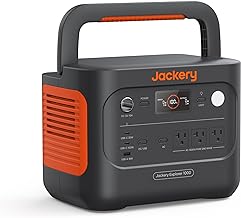
FAQ
Q: How long can an RV run on battery alone during an outage? A: Depends on battery capacity and load. A 200Ah lithium bank with moderate use (fridge, lights, water pump) lasts 12–24 hours; a 400Ah bank lasts 2–3 days. Per owner reports, most RV loads average 80–120 amp-hours per day.
Q: Is solar alone enough for off-grid living? A: In sunny climates, yes—if you size panels to exceed average daily consumption. 400–600W of solar typically generates 1.5–2.5 kWh daily, sufficient for a couple running lights, fridge, and water systems. Cloudy regions or winter travel require battery backup or a generator.
Q: What’s the best battery chemistry for RVs? A: Lithium (LiFePO4) is the modern standard for serious off-gridders. It tolerates partial discharge, lasts 8–10 years, and weighs 60% less than lead-acid. AGM (absorbed glass mat) is a budget alternative if you can accept 4–6 year lifespan and regular full-charge cycles. Per manufacturer specs and r/FulltimeRV consensus, lithium ROI breaks even in 5–7 years of heavy use.
Q: Should I buy a generator if I have solar? A: Yes, as a failsafe. Solar is weather-dependent; a 3000–5000W generator handles extended cloudy spells and simultaneous high loads (AC + water heater). Most full-time off-gridders run generators 5–10 hours weekly during winter or rainy seasons.
Q: How do I prevent battery over-discharge during outages? A: Install a battery monitor (BMS) and set low-voltage alarms at 50% state-of-charge. Stop using high-draw appliances when battery dips below 30%. Per lithium chemistry specs, discharging below 20% repeatedly shortens lifespan; lead-acid should never drop below 50%.
Summary
RV power outage preparation boils down to three layers: a robust battery bank (200–400Ah lithium or AGM), solar panels (400–800W) to recharge during daylight, and a backup generator (3000–5000W) for cloudy spells or simultaneous loads. Pair these with a quality inverter/charger, monitor your battery in real time, and adopt load-management habits—running high-draw appliances during peak solar hours, using propane when possible, and reducing consumption during weather events.
Off-grid living isn’t about being stranded; it’s about building resilience. Start with one upgrade (solar or a larger battery), test it during a weekend trip, then expand. Most RVers find that a 400Ah lithium bank, 600W solar, and a 3500W generator cover 95% of outage and boondocking scenarios. For system design help, see RV Power Systems: Generator vs Solar vs Hybrid Setup and How to Build a Solar Power System for Emergency Backup.


